Understanding Biochemistry: The Role of Organic Compounds in Living Organisms
This article explores the fundamental role of organic compounds in biochemistry, focusing on carbohydrates, proteins, lipids, and nucleic acids. It details how these compounds serve as building blocks for cells and store energy, highlighting the importance of enzymes as catalysts in speeding up chemical reactions. Additionally, we examine the transport of materials in and out of cells, and how different carbohydrates like glucose, starch, and cellulose contribute to cellular functions. Join us in unraveling the complexities of the molecules that sustain life.

Understanding Biochemistry: The Role of Organic Compounds in Living Organisms
E N D
Presentation Transcript
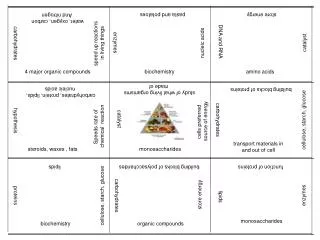
water, oxygen, carbon And nitrogen pasta and potatoes store energy speed up reactions in living things DNA and RNA carbohydrates enzymes catalyst nucleic acids 4 major organic compounds biochemistry amino acids study of what living organisms made of carbohydrates, protein, lipids, nucleic acids building blocks of proteins cells preferred source of energy catalyst carbohydrates cellulose, starch, glucose hypothesis Speeds rate of chemical reaction transport materials in and out of cell steroids, waxes , fats monosaccharides lipids building blocks of polysaccharides function of proteins store energy cellulose, starch, glucose proteins carbohydrates lipids enzymes monosaccharides biochemistry organic compounds