Air Pressure
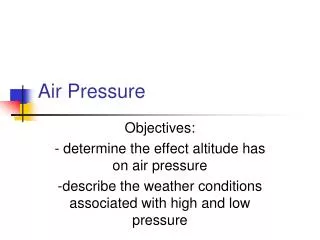
Air pressure is a fundamental concept in meteorology, influenced by various factors such as altitude, temperature, and humidity. Higher altitudes lead to lower air pressure, while lower altitudes result in higher pressure. Temperature plays a crucial role; warmer air is less dense and exerts less pressure, while cooler air is denser and increases pressure. Additionally, humidity affects air pressure, as moist air weighs less than dry air. Understanding these principles helps us comprehend weather patterns and atmospheric conditions.

Air Pressure
E N D
Presentation Transcript
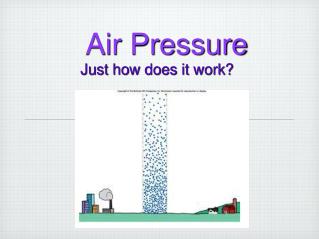
Air Pressure • Just how does it work?
Things that effect Air Pressure • Altitude (Elevation) • Temperature • Humidity (moisture in the air)
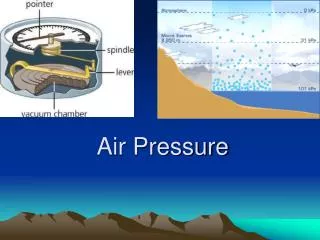
Altitude • The higher the altitude, the lower the air pressure. • The lower the altitude, the higher the air pressure.
Temperature • As the temperature goes up, the air pressure goes down. (hot molecules are further apart- less pressure). • As the temperature goes down, the air pressure goes up. ( cold air is more dense than warm air).
Humidity • Humidity is the amount of moisture in the air. • Water vapor weighs less than air molecules. • As the air becomes more humid, the air pressure goes down (moist air weighs less than dry air). • Drier air has higher pressure because dry air weighs more than moist air, therefore it has greater pressure.