Impact of Incomplete β-Catenin Gene Deletion on Tumor Formation in EGFRTL Mice
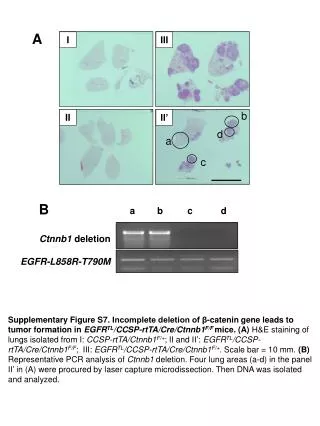
This study investigates the effects of incomplete deletion of the β-catenin (Ctnnb1) gene on tumor formation in a specific mouse model (EGFRTL/CCSP-rtTA/Cre/Ctnnb1^F/F mice). Histological analysis via H&E staining revealed significant changes in lung morphology. The study utilized laser capture microdissection to procure lung samples for PCR analysis, confirming the genetic alterations. The data from this research illustrate the critical role of Ctnnb1 deletion in lung tumorigenesis, providing insights into potential molecular pathways involved in cancer.

Impact of Incomplete β-Catenin Gene Deletion on Tumor Formation in EGFRTL Mice
E N D
Presentation Transcript
A I III a b c d b II II’ Ctnnb1 deletion d a EGFR-L858R-T790M c B Supplementary Figure S7. Incomplete deletion of β-catenin gene leads to tumor formation in EGFRTL/CCSP-rtTA/Cre/Ctnnb1F/Fmice. (A) H&E staining of lungs isolated from I: CCSP-rtTA/Ctnnb1F/+; II and II’: EGFRTL/CCSP-rtTA/Cre/Ctnnb1F/F; III: EGFRTL/CCSP-rtTA/Cre/Ctnnb1F/+. Scale bar = 10 mm. (B) Representative PCR analysis of Ctnnb1deletion. Four lung areas (a-d) in the panel II’ in (A) were procured by laser capture microdissection. Then DNA was isolated and analyzed.