The endocrine system
280 likes | 386 Vues
The endocrine system and the nervous system work in tandem to coordinate the body's functions, using chemical messengers such as hormones and neurotransmitters. While the endocrine system provides a slower response through hormones transported via the circulatory system, the nervous system acts quickly on nearby cells using neurotransmitters. Key components include the hypothalamus, pituitary gland, and thyroid gland, each contributing to hormone regulation and homeostasis. Dysfunctions like hypothyroidism and hyperthyroidism can significantly impact health, showcasing the importance of these systems.


The endocrine system
E N D
Presentation Transcript
The endocrinesystem Honors Anatomy & Physiology
Endocrine vs nervoussystem • act together to coordinate body’s activities • both: • use chemical messengers to communicate cell to cell • major function: homeostasis • endocrine: slower response time • hormones transported thru circulatory system • target cells (any cell with hormone receptor) anywhere in body • nervous: quicker conduction of signals • neurotransmitters • act on cells close by
Glands • no ducts • secretions released and diffuse into blood capillaries • have ducts • secretions released onto surface • example: sweat glands, salivary glands Endocrine Exocrine
2 types of hormones • bind to protein receptors in cell membranes (do not enter cell) • receptor-hormone activate enzyme in cytoplasm series of reactions result in cell response • enter cell & bind to receptor in cytoplasm or nucleus • Activates transcription of gene protein produced • generally action slower than peptide hormone Peptide Steroid
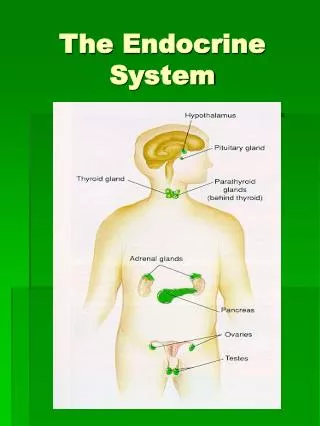
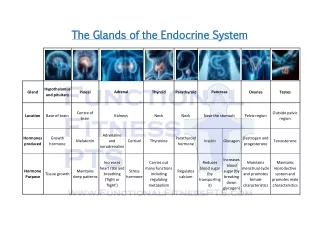
hypothalamus • part of brain • secretes “releasing” hormones that act on pituitary gland • axons that store the 2 posterior pituitary hormones end there
Pituitary gland • 2 lobes: posterior & anterior
Thyroid Gland • stimulated by TSH • secretes thyroxin (T4) and triiodothyronine (T3) • (-) feedback inhibition • both have similar effects on target cells
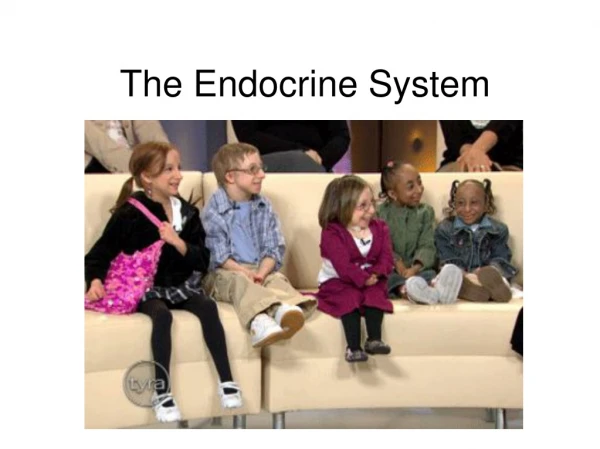
hypothyroidism • Thyroid produces too little hormone • several causes: Hashimoto’s autoimmune/ lack of Iodine in diet goiter (enlargement of thyroid due to increased TSH stimulation • Symptoms: • Adults: lethargy, weight gain, anovulatory cycles • Infants:cretinism: dwarfism, low IQ, failure to reach sexual maturity
hyperthyroidism • excessive secretion of thyroid hormones
Parathyroid Glands • 4 small glands embedded in posterior surface of thyroid gland • secrete: parathyroid hormone (PTH) • regulated by serum Ca++ levels • actions: • stimulates removal of Ca++ from bone • increases kidney tubules reabsorption of Ca++ • activates vit D which enhances Ca++ absorption from food
Adrenal Cortex • outer layer • produces 2 kinds of steroid hormones • Glucocorticoids • major 1 – cortisol: • reduces swelling by inhibiting immune system/ raises serum glucose (stimulates liver to make glucose from proteins or lipids • Mineralocorticoids • major 1- aldosterone • acts on kidney to promote absorption of Na+ & excretion of K+