Download
1 / 6
60 likes | 169 Vues
The Mayan civilization thrived from 250 A.D. to 900 A.D., spanning southern Mexico and northern Central America. City-states like Tikal, Copan, and Chichen Itza emerged, supported by advanced agriculture including maize, beans, and squash. Trade networks facilitated exchanges of goods such as salt, jade, and textiles. Dynastic kingdoms structured society into distinct classes, from the ruling nobility to the peasant majority. The classic period witnessed the creation of cultural texts like the Popol Vuh, reflecting a rich heritage intertwined with the dynamics of urban life.

E N D
Maya Creates a City State Standard 2.6 E.Q. What was needed for a Mayan society to build a city state?
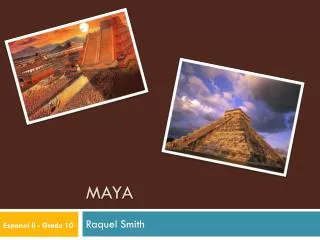
Maya Create City - States • Homeland of the Mayan stretched from southern Mexico into northern Central America. • Lowland lie to the north, being dry scrub forest of the Yucatan Peninsula and the dense, steamy jungles of southeastern Mexico and northern Guatemala. • Highland of the south included a range of cool, cloud – weathered mountains that stretch from southern Mexico to El Salvador.
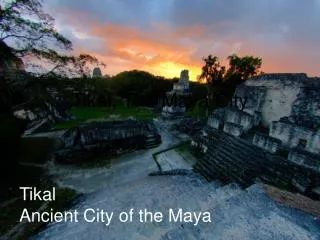
Urban Centers • Classic period of Mayan Civilization was from 250 A.D. to 900 A.D. • One major center in northern Guatemala was the city of Tikal. • Other important cities included Copan, Palenque, Uxmal, and Chichen Itza. • PopolVuh: Famous book written by the Mayan after the arrival of the Spanish.
Agriculture and Trade Support • Though independent, linked through alliance and trade. • Cities exchanged their local products such as salt, flint, feathers, shells, and honey. • Trade craft goods like cotton textiles and jade ornaments.
Agriculture and Trade Support • Mayan did not have a uniform currency, cacao beans sometimes served as one. • Agriculture, particularly growing of maize, beans, and squash, provided the basis for Mayan life. • Started using slash and burn agriculture methods, but included planting on raised beds above swamps and on hillside terraces.
Kingdoms Built on Dynasties • Successful farming methods lead to wealthy and the development of social classes. • Mayan king sat the top of this class structure. (Holy Figure) • Noble class, which included priests and lead warriors were the top rung of Mayan society. • Middle included merchants and specialized knowledge such as artisans. • Bottom of society, came the peasant majority.