
Understanding Cellular Respiration: Energy Release from Glucose
E N D
Presentation Transcript
One gram of glucose when burned in the presence of oxygen releases 3811 calories of heat energy.
calorie • Amount of energy needed to raise the temperature of one gram of water one degree Celsius.
Calorie • Calorie = 1000 calories • = 1 kilocalorie Calories on food labels are actually kilocalories
How does the amount of energy released in glycolysis compare to burning one gram of glucose? • Small amount (around 3.5% the amount from burning) • So….. 3811 X 3.5% = • 133.4 calories
Cellular Respiration • 1. Glycolysis • 2. Krebs cycle • 3. ETC and chemiosmosis
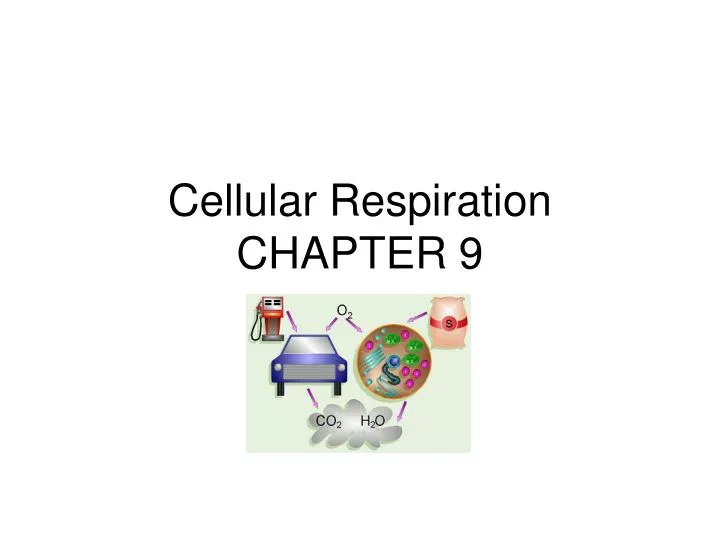
Cellular Respiration • C6H12O6 + 6O2 --> 6CO2 + 6H2O + ~38 ATP • Glucose+ oxygen --> carbon+ water +energy • dioxide In the mitochondrion
Glycolysis Animation: How Glycolysis Works glucose Starts with 2 ATP Pyruvic acid Makes 4 ATP Nets: 2 ATP
NAD+ • An electron carrier • Nicotinamide adenine dinucleotide • Accepts electrons (H+) to form NADH e- e-
Glycolysis is Anaerobic • Without oxygen oxygen
How does NADH regenerate back to NAD+? • The process of fermentation. • It loses the electrons of NADH to form NAD+ again. • Remember the yeast lab?
Sing or Simulate • Glucose, Glucose SONG • See Teacher Tube
END OF GLYCOLYSIS • How much of the energy in glucose is still unused? • 90% Doesn’t seem very efficient, does it?
Fermentation Anaerobic – no oxygen In cytoplasm Krebs Cycle Aerobic –needs oxygen In mitochondria Now What, Pyruvic Acid?
Fermentation cheese sauerkraut bread wine
Alcoholic Fermentation • Pyruvic acid + NADH alcohol + CO2 + NAD+
Lactic Acid Fermentation • Pyruvic acid + NADH lactic acid + NAD+
ANAEROBIC Does not use oxygen In the cytoplasm EX: Glycolysis Fermentation AEROBIC Uses oxygen In the mitochondrion EX: Krebs cycle ETC and chemiosmosis CONTRAST