Download
1 / 22
220 likes | 339 Vues
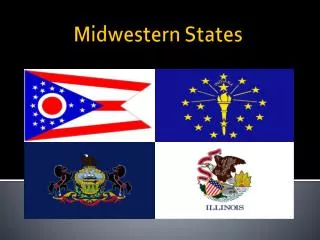
This overview delves into the changing political landscapes of key Midwestern states, focusing on Pennsylvania, Ohio, Indiana, and Illinois throughout the 20th century. With Pennsylvania transitioning from Republican dominance to a competitive two-party state post-New Deal, and Ohio being designated a "swing state" by both major parties, we explore the regional dynamics and how local politics, ethnic diversity, and economic interests shape voter preferences. Indiana remains competitive despite a strong Republican reputation, while Illinois has shifted from Republican strongholds to Democratic leadership, especially within diverse urban centers like Chicago.

E N D
Pennsylvania • In the 20th century 1-party Republican 2-party competitive. • End of Republican dominance-1934. • New Deal. • By 1950 competitive 2-party state. • Philadelphia/Pittsburgh stayed Republican longer than most NE cities.
Ohio • “The Heart of It All” • Republicans very strong on state level (farmers and business communities) • Democrats considerable power on the local level (city machines) • Both DNC and RNC designate OH as “swing state”
Indiana • Strong Republican reputation BUT the Democrats have kept IN competitive • Fits Elazar’s “individualistic” model well • Major battles within both GOP and Democrats GOP – religious R v. moderate business sector Democrats – industrial v. conservative south
Illinois • Alternating one-party two-party competitive • Lincoln – Illinois Republicans • Chicago transformed from Republican to Democratic Much bigger and more ethnically, racially diverse than rest of state (up to 42% of state population) • State party offices in Chicago/Springfield