Understanding the Phases of Matter: Solids, Liquids, and Gases Explained
90 likes | 236 Vues
This video explores the three primary phases of matter: solids, liquids, and gases. Solids have a fixed volume and shape, with particles that vibrate but do not move freely. Liquids take the shape of their container, allowing particles to slide past each other while retaining a definite volume. Gases fill their container and are highly compressible, with particles that move quickly and freely. The video includes a Venn diagram activity to help visualize and compare the unique characteristics of each phase, enhancing understanding through collaboration and creativity.


Understanding the Phases of Matter: Solids, Liquids, and Gases Explained
E N D
Presentation Transcript
Video • http://www.youtube.com/watch?v=s-KvoVzukHo
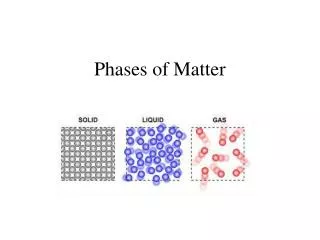
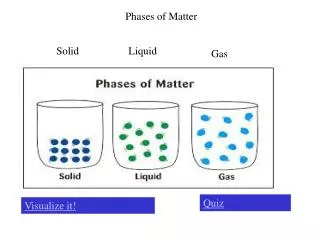
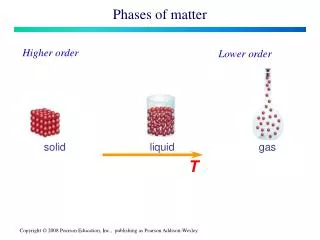
Solids • Retains a fixed volume and a fixed shape • Rigid-particles are locked into place • Not easily compressible • Little free space between particles • Does not flow easily • Particles are tightly packed, usually in a regular pattern • Solids vibrate (jiggle) but generally do not move from place to place
Liquids • Assumes the shape of the part of the container that it occupies • Particles can move/slide past one another • Not easily compressible • Little free space between particles • Flows easily • Particles are close together with no regular arrangement • Particles vibrate, move about and slide past each other
Gases • Assumes the shape of the container • Particles can move past one another • Compressible • Lots of space between particles • Flows easily • Particles are well separated with no regular arrangement • Gas particles vibrate and move freely at high speeds
Draw/Act • Join with another group of 2 people and draw on the whiteboard or act out in your group the differences between solids, liquids and gases.