Download
1 / 8
80 likes | 200 Vues
Zach W., a 9-year-old from Maryland, has created a prototype bee safe to address the alarming decline in honeybee populations, primarily due to colony collapse disorder caused by neonicotinoid pesticides and habitat loss. As bees play a crucial role in pollinating over 70% of our food, their survival is essential for global agriculture. Zach's prototype features a slot for bee entry and bristles intended to clean bees as they enter. He plans to improve it by adding bright colors to attract bees and using softer bristles to prevent any injury.

E N D
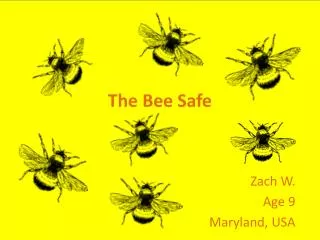
The Bee Safe Zach W. Age 9 Maryland, USA
The problem: COLONY COLAPSE DISORDER • bee populations are dropping • scientists believe one of the main causes is neonicotinoids (the pesticide most farmers use) • Another cause is loss of habitat • 1/3 of honey bee colonies in US have disappeared. • Why does it matter? BECAUSE WE NEED BEES! • Bees are pollinators • over 70% of our food is pollinated by bees • our food will be threatened if bees continue to die Source: Grossman, Elizabeth. "Declining Bee Populations Pose A Threat to Global Agriculture." By Elizabeth Grossman: Yale Environment 360. Yale E360, 30 Apr. 2013. Web. 28 Mar. 2014.
Investigate inventions and ideas of the past • (required step) In different places around the world beekeepers raise bees in beehives like these. Art from Egypt shows people raising bees from 4500 years ago. None of these bee homes keep the bees safe from pesticides or help clean them.
I built a prototype with cardboard. I cut a slot for bees to enter the bee safe. I added bristles from a broom to to clean the bees as they enter.
Test your invention. • I put my bee safe outside to see if bees would come in. • No bees came in because the weather is too cold. I learned that in the winter honeybees stay inside their hive and other bees hibernate. • I need to test my invention again when the weather warms up and the spring blossoms are out for the bees.
Keep improving your invention. After building and trying my prototype, I will tweak these things: Add colors to the box to attract bees. I read that bees are attracted to bright colors, so I will make my bee safe out of bright yellows and blues to attract bees. Use less stiff bristles. I used broom bristles on my prototype and they are too stiff for the bees to fly through without getting injured. I will use more flexible, soft bristles.
Market your invention to people who might buy it. (required step)