Solutions
This resource explores the fundamental concepts of solutions and the factors that influence the rate of dissolution. It defines key terms like solute, solvent, and aqueous solution while explaining the impact of temperature, stirring, and surface area on how quickly a solute dissolves. The document also includes an interactive experiment with Smarties to demonstrate the effects of different dissolution techniques. Understanding these concepts is essential for comprehending various chemical reactions and processes involving solutions.

Solutions
E N D
Presentation Transcript
Solutions Basic Vocabulary Factors that affect the rate of dissolution
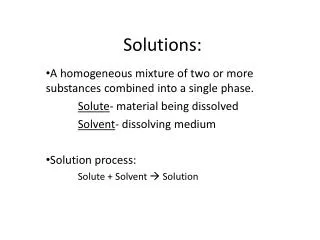
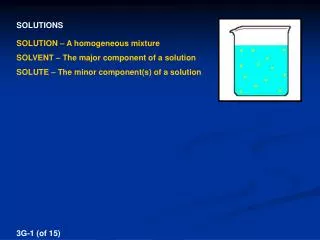
Solution Vocabulary • Solution – a uniform mixture that can contain solids, liquids or gases Solution = Solute + Solvent • Solute – one or more substances dissolved in a solution • Solvent – the substance that dissolves a solute to form a solution; the most plentiful substance in the solution
Would the salt or the water be the solute in a salt-water solution?
Solution Vocabulary • Aqueous Solution – a solution in which the solvent is water • Miscible – describes two liquids that are soluble in each other • Immiscible – describes two liquids that are not soluble in each other • Dissolution – how fast the solute dissolves in the solvent
Experiment Time • Numbers 1, 2 and 3 • 1 – only let the Smarties sit on your tongue • 2 – only swirl it around in your mouth • 3 – chew • When yours is gone raise your hand
Factors that affect the rate of dissolution • Temperature • Stirring/Agitation • Surface Area
Temperature • For Solids: • Increase the temperature, increase rate of solute dissolving • Ex: sugar in tea to make sweet tea • Opposite for Gases!! • Increase temperature, decrease rate of solute dissolving • Ex: a carbonated soft drink will lose its fizz (CO2) faster at room temperature
Stirring/ Agitation • Stirring or agitation • moves dissolved solute particles away from the contact surfaces more quickly • allows new collisions between solute and solvent particles to occur
Surface Area • Larger surface area allows more collisions to occur • Which dissolves faster? Why? a teaspoon of granulated sugar cube or a sugar cube