The Spread Of Islam
120 likes | 252 Vues
Following the death of Muhammad in 632, Muslims faced leadership challenges but quickly chose Abu-Bakr as the first Caliph. Facing dissent and rebellion, Abu-Bakr utilized military force to consolidate authority, expanding the Muslim state across Arabia by the time of his death. Under successive caliphs, the Islamic empire extended into Syria, Lower Egypt, and Persia, reaching vast territories by 750. Their success stemmed from disciplined troops and strategic advantages over weakened foes. Notably, Muslims practiced religious tolerance, allowing conquered peoples to retain their faith in exchange for a poll tax, as mandated by the Quran.


The Spread Of Islam
E N D
Presentation Transcript
The Spread Of Islam 100% Islam
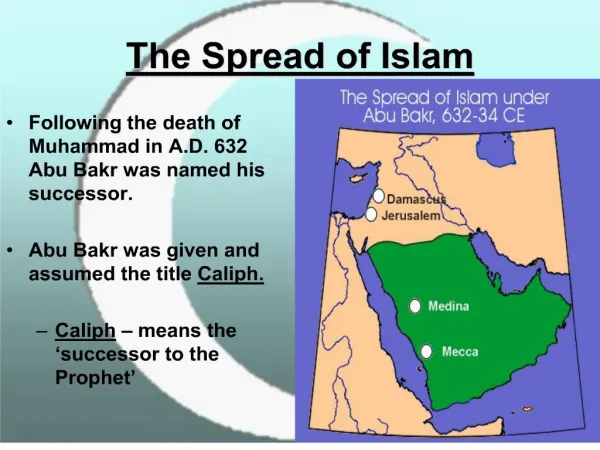
Crisis • Muhammad dies in 632 • Muslims now had to find a new leader • Muhammad did notname a successor
Solution • Muslims chose Abu-Bakr who was a loyal friend of Muhammad • He became the first Caliph • Caliph – (kay-lif) means successor or deputy
Abu-Bakr • After Muhammad died some Muslims… • Refused to pay taxes • Tried to say they were prophets themselves • Some tribes abandoned Islam • In order to get things under control, Abu-Bakr used the military to get authority.
Muslim State • By the time Abu died, the Muslim state controlled all of Arabia • Under the next 2 caliphs they took: • Syria • Lower Egypt • Parts of Persia • By 750 they controlled from the Atlantic Ocean to the Indus River (2x the width of the USA!!)
Muslim Troops • They were successful because they were • Willing to struggle till the end for Islam • Well disciplined • Expertly commanded • Enemies were not used to their style of warfare
Byzantine and Persia • The Byzantines and Persia were already weak from long time conflicts • The people welcomed Islam
Treatment of Conquered People • Muslims were tolerant of conquered people • The Quran forbids forceful conversion • They let others keep their religion if they paid a polltax • People who did not convert were not allowed to spread their own religions