Download

1 / 27
270 likes | 388 Vues
This project focuses on developing a candle solution for households with cats, addressing the challenge of traditional plug-in candles with cords, which can be accessed and disturbed by pets. It emphasizes a needs assessment and problem formulation process, identifying explicit and implicit customer requirements, brainstorming solutions, and conducting market and technical research. Key features include safety, aesthetics, automation, and low maintenance. The design aims to create a visually appealing, durable, and affordable product that enhances home decoration while ensuring the safety of both pets and property.

E N D
The Design ProcessAbstraction & SynthesisPart I by Prof. Bitar
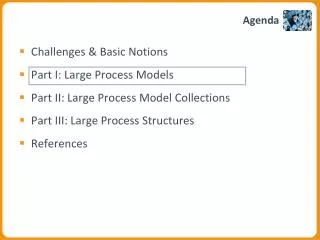
Needs Assessment & Problem Formulation Homework #1 Need / Idea Perform Market Research HW#1 Needs Assessment & Problem Formulation Customer Requirements Brainstorm / Perform Technical Research Product Specification
Abstraction & SynthesisHomework #2 Research Prior Art Brainstorm Possible Solutions HW#2 Abstraction & Synthesis Perform Value Analysis Viable Options Apply Constraints Preferred Solution
Example Design Problem • We like to have candles in the windows of our house, especially around the Holidays. • The candles we currently have are plug-in, with long cords. • Some are turned on manually, while others have a sensor to automatically turn on, when it gets dark outside. • We have 12 windows with candles.
“The Masked Marauder” • Romeo has a bad habit of going from window to window, knocking down candles, breaking bulbs and getting tangled in cords… • My solution? • Not acceptable • OK, I need your help…
The Customer Requirements • Explicit • Cat Safe • Look Nice • Different Colors • Automatic • Implicit • Low Cost • Reliable / Durable • Low Maintenance
Formal Brainstorming Session“The Idea Trigger Method” • Phase 1: Idea Generation Phase • Phase 2: Idea Trigger Phase • Phase 3: Compilation Phase
Brainstorming Session“The Rules” • No Holding Back • No Boundaries • No Criticizing • No Dismissing • No Limits • No Restrictions
Phase 1: Idea Generation • Take a few minutes to write down (list) your ideas on a piece of paper. • Identify possible solutions. • Identify possible features that the candles should have. • Identify as many areas of concern as you can think of. • Wild and crazy ideas are OK!
Phase 2: Idea Triggering • Now, as ideas are shared, eliminate duplicates from your list. • If you think of anything else, write it down on ANOTHER sheet of paper. • These are the new ideas triggered from the previous ones. • This process can be repeated as often as necessary until all ideas are exhausted.
Phase 3: Compilation • Compile a list of all the ideas and begin to discuss the feasibility of each. • Identify key areas of concern. • Identify practical solutions. • Identify a set of product requirements.
A Possible List of Customer Requirements • Safety / Durability • Heavy Base • Unbreakable Bulb or LED • Secure to Window Sill, Sash or Window Pane • No Cords • Low Voltage • Aesthetics • Traditional Look • Interchangeable Color Bulbs or LEDs • Flickering Option • Low Operating Cost • Long Battery Life (Efficient) • Rechargeable • Solar Rechargeable • Photo Sensor or Timer
Researching Existing Products“The Prior Art” • http://www.lightsforalloccasions.com/ • http://www.sillites.com/photos.php • http://www.qvc.com • http://www.uspto.gov/ • Solar Powered Electric Candle
Possible System Block Diagram Photo Sensor Solar Cell Charge Controller Rechargeable Battery Drive Circuit LED Mode Selection Flickering Control
Technical Research Areas Solar Cells – Availability, cost, size, shape, output voltage, output current, silicon types, spectrum sensitivity. Charge Controllers – Voltage Regulation, Current Regulation, etc. Rechargeable Batteries – NiCad, NiMH, Other?, Overcharging & Under-voltage Concerns, etc. Drive Circuits– Transistor, Voltage Regulator, DC/DC Boost Converters, Charge Pumps, etc. LED’s – Colors, Voltage Levels, Current Requirements, Intensities, Illumination Angles, etc. Photo Sensors – Types, Interface Requirements Analog and/or Digital Processing – op amps, digital logic chips, microcontrollers
A Practical Approach • Start with the Distributors • www.digikey.com • www.mouser.com • Then the MFG’s Data Sheet • Repeat this process for each block or component in your diagram. • Begin to consider the interfaces between blocks.
Picking one aspect: LED’sQuestions to Answer • What LED’s are available? • Colors? Sizes? Shapes? • What are the key LED specifications? • What is the proper way to power an LED? • How much do they cost? • What companies manufacture LED’s? • What companies distribute LED’s? • How much energy is required for this application?
Colors • Infrared • Red • Orange • Yellow • Green • Blue • Violet • Ultraviolet • White Voltages Ranging from 1.6V to 3.2V depending on color (assuming a constant current of 20mA)
LED Specifications – Curves !Max. Forward Current vs. Voltage Check: 20mA @ 3.2V (Typical)
LED Specifications – Curves !Relative Luminous Intensity Wavelength (nm)
LED Specifications – Curves !Spatial Radiation Pattern Check Viewing Angle !!
LED is ChosenBlock Diagram is Modified Photo Sensor White LED 3.2V @ 20mA (worst case) Solar Cell Charge Controller Rechargeable Battery Efficient Drive Circuit Mode Selection Flickering Control
Here’s another… What about the Battery? • (To Be Continued…) • In the meantime, you come up with a list of questions.