Analyzing Thomas Paine's Persuasive Techniques in "Common Sense"
50 likes | 172 Vues
This analysis delves into the rhetorical devices employed by Thomas Paine in "Common Sense," highlighting his use of diction, connotation, and denotation to evoke associations and establish credibility. We examine how figurative language expresses complex ideas concretely, alongside the effects of repetition and tone to enhance his persuasive message. Furthermore, we uncover the power of syntax, including parallelism and rhetorical questions, to engage readers emotionally (pathos), appeal to values (ethos), and present logical arguments (logos).


Analyzing Thomas Paine's Persuasive Techniques in "Common Sense"
E N D
Presentation Transcript
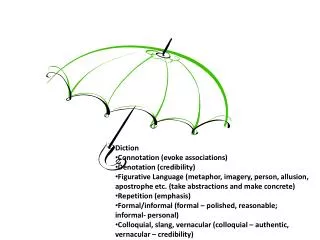
Diction • Connotation (evoke associations) • Denotation (credibility) • Figurative Language (metaphor, imagery, person, allusion, apostrophe etc. (take abstractions and make concrete) • Repetition (emphasis) • Formal/informal (formal – polished, reasonable; informal- personal) • Colloquial, slang, vernacular (colloquial – authentic, vernacular – credibility)
Tone – author’s attitude Paine’s persuasive tone urges Americans to … Select 2 complimentary tones or Use tone as the effect of any of the other devices
Syntax • Parallelism- (emphasis) • Anaphora • Antithesis (contrast) • Rhetorical Question • Loose • Periodic • Cataloguing( show pervasiveness)
Rhetorical Appeals: • Ethos – unite in values • Pathos – evoke emotion • Logos – add credibility by backing up with support • Tone – author’s attitude (persuasive; didactic; positive
Soapstone Thomas Paine