Building Resilient Youth: Effective Prevention and Intervention Initiatives in Denver Public Schools
100 likes | 253 Vues
This presentation explores Denver Public Schools’ comprehensive approach to building youth resiliency through research-based prevention and intervention strategies. Key philosophical tenets emphasize the importance of protective factors that mitigate risks during adolescence, aiming for positive developmental outcomes. By focusing on effective programs like Life Skills Training and the Olweus Bullying Prevention program, we highlight the significant impact that faithful implementation can have on reducing violence and promoting a nurturing school environment.


Building Resilient Youth: Effective Prevention and Intervention Initiatives in Denver Public Schools
E N D
Presentation Transcript
Denver Public Schools Prevention & Intervention Initiatives Bob Anderson Prevention Education @ DPS Building Resilient Youth Philosophy Fidelity of Implementation Research-Based, Valid Programs Focus on Protection Back to Switchboard
Resiliency The Ultimate Educational Goal “Resiliency is the experience of encountering life’s adversities and challenges, being disrupted, but then not only recovering from the adversity, but surfacing from the experience with strength, confidence, happiness, self-esteem, and skills” Glenn Richardson Title Slide
Prevention Philosophical Tenets • Adolescence is a developmental stage fraught with risk, risk-taking, and challenge, as well as promise. • Risk-taking is a normative developmental process. • Prevention, therefore, involves channeling normative developmental behavior & processes in ways least likely to result in long-term, negative consequences. • In recent years, research interest has focused on isolating, identifying, and controlling factors that assist in this process. Title Slide
Prevention Philosophical Tenets II • Collectively known as ‘Protective Factors’, these entities reduce the severity of risk, the consequences of risk behavior, or reduce the likelihood of risk behavior. • Focusing on Protective Factors allows us to focus on the positive, growth-oriented potential present in youth. • The following framework of Proposed Protective Factors is taken from the recent report of the Surgeon General on Youth Violence. Title Slide
School Violence Proposed Protective Factors*: Individual • Intolerance of deviance • High IQ • Being Female • Positive Social Orientation • Perceived Sanctions for Transgressions (i.e. those engaging in bullying suffer publicized negative consequences.) Taken from Youth Violence: A Report of the Surgeon General (2001, p. 58) Title Slide
School Violence Proposed Protective Factors*: Family • Warm, supportive relationships with parents or other adults • Parents’ positive evaluation of peers • Parental monitoring Taken from Youth Violence: A Report of the Surgeon General (2001, p. 58)
School Violence Proposed Protective Factors*: School • Commitment to school • Recognition for involvement in conventional activities Taken from Youth Violence: A Report of the Surgeon General (2001, p. 58)
School Violence Proposed Protective Factors*: Peer Group • Friends who engage in conventional behavior Taken from Youth Violence: A Report of the Surgeon General (2001, p. 58) Title Slide
Research-Based, Valid Programs • The Life Skills Training and Olweus Bullying Prevention programs are CSPV* Blueprint programs. • The Second Step violence prevention curriculum was the only violence prevention program to receive the US Dept. of Education’s Exemplary rating for prevention programs * Center for the Study & Prevention of Violence, CU Boulder Title Slide
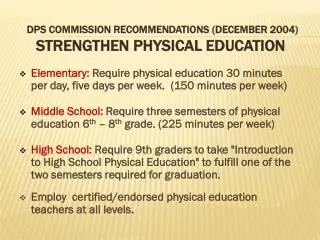
Fidelity of Implementation • Life Skills Training evaluation studies show a 25% reduction in use when implemented with poor fidelity, while use decreased by 50% when implemented with high fidelity. • DPS Schools implementing Second Step on a school-wide basis, for multiple years report the fewest suspensions for fighting. Title Slide