Download
1 / 36
360 likes | 489 Vues
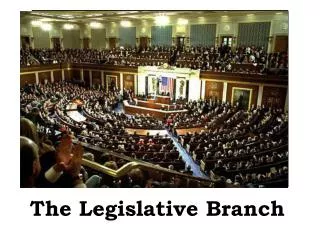
The Legislative Branch of the U.S. government consists of a bicameral legislature: the House of Representatives with 435 members and the Senate with 100 members. This structure allows for representation based on population in the House and equal representation in the Senate. The branch holds enumerated powers such as declaring war and levying taxes, alongside implied powers like those granted by the Elastic Clause. Factors influencing lawmaking include media, lobbyists, and public opinion, while issues like gerrymandering and redistricting impact representation.

E N D
The Legislative Branch Structure & Power
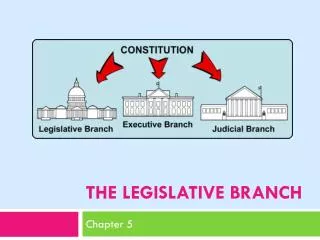
What is the Legislative Branch? • Bicameral Legislature • Bicameral=2 Part • House of Representatives • 435 members (Representatives) • Senate • 100 members (Senators) • Why is there such a difference in the #’s?
Qualifications of Congress Turn to pg. 5 in Interactive Notebook, Complete - Use MD General Assembly article on back to complete page
Powers of Congress • Why bicameral? • H.of R.= Representation based on population • Ex- New York vs. Delaware • Senate= Equal representation • Everyone gets 2 • Enumerated Powers • War Powers, Levy Taxes, etc • Implied Powers
Implied Powers of Congress • Elastic Clause • Necessary & Proper clause • Effects on functioning of government • Increase in size & scope • Regulation of finance, health care
Traffic Light Activity • Create a foldable that explains the powers of the legislative branch • Cover: Create a title & picture • Green= Expressed Powers • Inside Left • 2 Examples from each • Yellow= Implied Powers • Inside Middle • 2 Examples from each • Red= Denied Powers • Inside Right • 2 examples from each • Effects of Necessary & Proper Clause • 3 Effects (Outside left) • Bicameral: House & Senate Facts (5 qualifications each) • EX- # of representatives; citizenship; age; basis of # of seats • Middle Outside *You may use books, notes, or Interactive notebook pgs. 2-3
Legislative Tools • Filibuster (Senate) • Historical method to delay vote or block debate • Increase visibility of issue; lead to compromise • 60 votes to stop it (longest ever 24+ hours) • Cloture • Video Clip • http://www.cbsnews.com/video/watch/?id=6297689n • Should the filibuster be eliminated? • Do you agree or disagree with the speaker • ? Why/why not?
Legislative Tools • Conference Committees • Set up by House & Senate to settle disagreement on a bill • Remember, a bill must pass thru House and Senate before becoming law!!! • Overriding a Presidential Veto • 2/3 vote by Senate
The Legislative Branch Lawmaking Process
Representation & Reapportionment • Census is taken every 10 yrs • Reapportionment • Change in the # of representatives each state has • Based on population size • # of House of Reps members • Pg. 10-13 in interactive notebook • Complete pg. 10, 11 & 13 • Discuss
Re-districting • State Legislators draw boundaries for Congressional districts • Power is sometimes abused • Unequal districts drawn • Gerrymandering • Should be base on pop. (1 person=1 vote) • Many times, increase in racial/ethnic representation • No guidelines in Constitution
Gerrymandering • Drawing state lines to give one party an electoral advantage • “Packing & Cracking” • Funky shaped districts use to: • Pack one party/group into one district • Crack one party/ethnic group into many districts • Both reduce influence • Irregular shapes drawn for political reasons • Pg. 126 Gerrymandering map
Referendum & Recall • Recall • Voters kick an elected official out of office • Referendum • Special election used to recall official
Initiative • Citizens propose a constitutional amendment or law
The Legislative Branch External Factors
External Factors that influence lawmaking • Media • Lobbyists • Political Action Committees • Interest Groups • Citizens • Public Opinion
Media • The media can have a major influence on public policy • Coverage of events on TV/News • Amount of time certain topics get in spotlight • More TV exposure means more people form opinions about a certain issue • Social media • Citizens get instant news and info.
Interest Groups • Interest Groups • A group with common goals who organize to influence government • Public Interest Groups • A group that seeks policy goals that it believes will benefit the nation • Many interest groups have ties to business, labor, or agriculture • Interest Group Spending: • http://www.opensecrets.org/industries/index.php
Why Form Interest Groups? • Many voices with the same message have a greater impact than 1 voice!
Interest Groups • What is the idea behind this political cartoon?
Are you a free-rider? • Free Rider • An individual who does not join a group representing his or her interests yet receives the benefit of the group's influence.
Interest Groups • Turn to pg. 30 in Interactive Notebook • Use graphic organizer to categorize interest groups • Read Summaries of the different kinds of interest groups • Read pgs. 31-33 • Highlight key points and ideas • Answer questions at the end of each section
Lobbyists & PAC’s • Lobbyist: • An interest group representative • Lobbying: • Direct contact made by a lobbyist in order to persuade government officials to support the policies their interest group favors • Political Action Committees • Interest groups that raise & spend large sums of money to influence election campaigns • Free Rider • An individual who does not join a group representing his or her interests yet receives the benefit of the group's influence.
Lobbyists & PAC’s • Turn to pg. 35 in Interactive Notebook • Read Study Guide 18.2 • Mark text to pick out important points • Answer the question at the end of each section
Start up an interest group • http://www.cbsnews.com/video/watch/?id=7387331n • Think about some social issues that are important to you • Brainstorm at least 5 issues that America faces • Select the one issue that you care about the most & come up with a name for your interest group • You may either: • Create a 30 second commercial script • Write a newspaper article (2 paragraphs) to express your viewpoint • Write a rap/song/poem to express you viewpoints • Create a print ad (like from a newspaper or magazine) • You will share your work with class mates at the end of the period
Public Opinion • Public Opinion • Polls/surveys are taken to find the opinions of a representative group of Americans on many issues • Government officials take poll numbers into account when making policy decisions • Iraq War------------->
Citizen Influence on Policy • You have the power to make changes! • Contact local legislators • City Council • State Legislators • Representatives • Testify at Congressional Hearings • Join an interest group • Organize a PAC • Use the news media to your advantage • Call the local paper or TV station about your concerns
Activity • As a class, read: • The Public Choices of Senator AspyerTu More • Volunteer for a role or read along • Pg. 38-45 in Interactive Notebook • Answer Bulleted Questions on pg. 47 of Interactive Notebeook • 4 groups: • Chamber of Commerce • The Locals • The Fishermen • Retired People • Discuss Roles & Answer questions