The 1850 Compromise: A New Chapter in the Slavery Debate
170 likes | 336 Vues
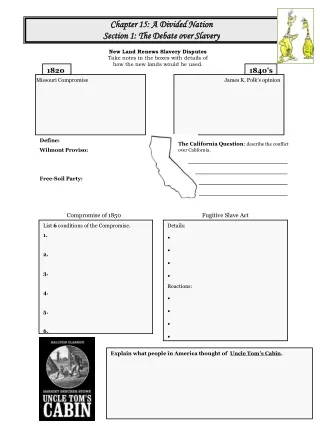
The Mexican-American War resulted in over 500,000 square miles of new territory for the US, reigniting the contentious issue of slavery. The Wilmot Proviso aimed to make these lands free but failed in the Senate, highlighting sectionalism. California's admission as a free state threatened Senate balance, leading to the Compromise of 1850. It allowed California as a free state while establishing popular sovereignty for the rest of the Mexican Cession and introduced a stringent Fugitive Slave Act. The reactions to these developments polarized the nation, sparking further conflict.


The 1850 Compromise: A New Chapter in the Slavery Debate
E N D
Presentation Transcript
The Debate Over Slavery Chapter 15
1. The US gained more than 500,000 square miles of land in the Mexican-American War, this renewed the fight over slavery
2. Regional Differences One proposed solution was the Wilmot Proviso which would make all of the new territory free – It died in the Senate Sectionalism became an issue
3. The California Question Most people in CA opposed slavery Admitting CA a free state would upset the balance of power in the Senate
2. The rest of the Mexican Cession would be federal land with the slavery issue decided by popular sovereignty
3. Texas would give up some land and the government would pay off it’s debt
C. Reactions the the Compromise of 1850 Opposed by John C. Calhoun - claimed it would destroy the nation’s balance and lead to Civil War. Asked for the South have the right to secede Daniel Webster was instrumental in getting the bill passed
1. Details Made it a crime to help runaway slaves & allowed officials to arrest slaves in free areas punishable by 6 months in jail and a $1000 fine Only white people could testify Commissioners earned $5 for setting a slave free and $10 for sending them back
2. Reactions Thousands of northern African Americans fled to Canada Northerners the Fugitive Slave act, especially the lack of trial by jury Most that resisted did so peacefully, however sometimes violence erupted such as the Anthony Burns Case