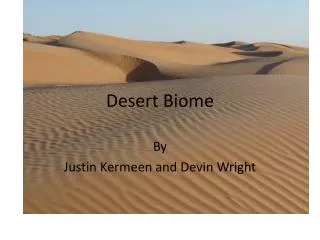
Desert Biome
The desert biome is a unique ecosystem characterized by its extreme temperatures and limited rainfall, averaging around 6 inches per year. Desert life includes remarkable animals like horned vipers, fennec foxes, ground squirrels, and meerkats, all of which exhibit adaptations such as water storage and nocturnal behavior to survive harsh conditions. The vegetation, including cacti and shrubs, has sturdy roots, water retention capabilities, and protective spikes to deter herbivores. Deserts cover approximately one-fifth of the Earth's land surface, illustrating the resilience of life in such an arid environment.

Desert Biome
E N D
Presentation Transcript
DesertBiome By: Nick Radomski and Connor Howell
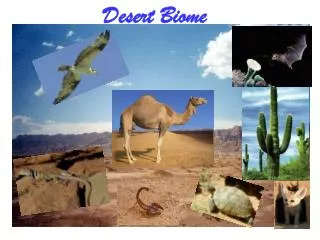
Desert life includes horned vipers, the Fennec Fox, ground squirrels, Black-tailed Jack rabbits, Meerkats, the Spotted Hyena, lizards, and Kangaroo Rats.
Adaptations • The animals have water storage and are nocturnal so they don’t have to get hot and use their water. • The plants have sturdy roots to stay attached to the ground and they also have water storage. They ‘like the animals have spikes to keep from being eaten for foood and water.
The plants in the desert include groundhugging shrubs, cacti, and short woody trees. The soil is sandy with a layer of clay below.
In the summer, the temperature can go up to 120° Fahrenheit and as low as 110.
Hot and dry deserts don’t get very much rain. They only get about 6 inches of rain per year.
Biotic The living organisms use the non-living features around them as a home or for protection. Abiotic These non-living features are lived in, under, around and so on by the living creatures of the biome.

![Desert Biome :]](https://cdn1.slideserve.com/2374577/desert-biome-dt.jpg)