Understanding Ionic Compound Formation: Balancing Charges and Criss-Cross Method
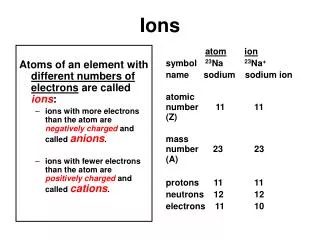
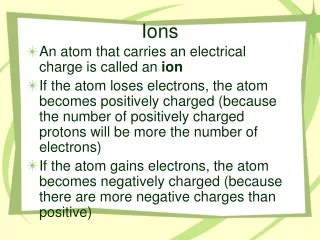
This detailed guide explores the process of adding ions to form ionic compounds, such as NaCl and MgO. By understanding how to balance charges, we apply the criss-cross method for compounds like Na2O and MgCl2. The key steps include determining effective charges and managing subscripts to maintain neutrality in compounds. This resource is perfect for chemistry students eager to grasp ion combinations and charge balancing techniques used in ionic compound formation.


Understanding Ionic Compound Formation: Balancing Charges and Criss-Cross Method
E N D
Presentation Transcript
Adding Ions Cause there’s no youtube video
NaCl+KF NaCl+KF ????? Na1+Cl1- + K1+F1- Na1+F1-+K1+Cl1- The charges balance out so there’s no need to fix it! Notice how you add the first and last elements together and the two elements in the middle
NaCl+MgO Na1+Cl1-+Mg2+O2- • Na1+ O2-+Mg2+ Cl1- BUT WAIT! The compounds arent neutral now!!! So we criss cross and get this! Na2O+MgCl2
NaO2+K3N Before we go on, I must address a couple of things. First, to get the effective charge (in other words, the charge of the element that we use) multiply the subscript (x) by the charge, so Na2has a charge of 2 but just normal old Na has a charge of 1. if that makes any sense Na21+O22-+K31+N3- Secondly, when dealing with 2 molecules with a subscript, when you add them together, you must first get rid of the subscript (especially if the subscript is greater than 3) so let’s say we have a product like Na2 O4you are going to want to get rid of the subscript first, so it reads NaO, then you can continue to criss-cross, and because neither of the elements has a subscript you criss cross by the original charge of the element.