The United States and Isolationism: Balancing National Defense and Homefront Support
270 likes | 398 Vues
Explore the complex relationship between U.S. isolationism and national defense during World War II. From the Neutrality Acts designed to keep America out of conflict, to the Lend-Lease Act facilitating aid to allies, the strategies evolved as global threats increased. The aftermath of Pearl Harbor catalyzed the nation's entry into war, with significant contributions from states like Georgia, which supported military efforts through job creation and training facilities. This period also highlighted domestic challenges, including racial tensions and the impact of wartime needs on American society.


The United States and Isolationism: Balancing National Defense and Homefront Support
E N D
Presentation Transcript
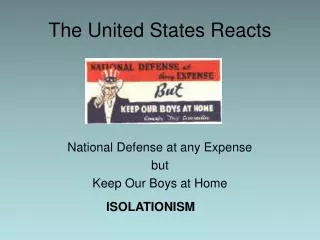
The United States Reacts National Defense at any Expense but Keep Our Boys at Home ISOLATIONISM
The United States Reacts • Neutrality Acts (keep US out of war) • No passage on ships belonging to warring nations • No loans or credit to warring nations • Page 396 • Lend-Lease Act (help other countries) • Federal gov’t power • Lend or rent military goods • $50 billion • Page 397
Airfield at Ford Island
F.D.R. (1882-1945) 32nd President of the United States Franklin Delano Roosevelt - Pearl Harbor Address The War Begins
300,000 Georgia men and women 7,000 died Women served as nurses, clerks, and pilots (WAVS) Georgia’s Contribution to the War
Bell Aircraft Marietta, GA 28,000 jobs 6,000 women B-29s Page 405
447-foot long Brunswick 16,000 jobs Savannah 200 ships built Liberty Ships Page 405
Military Training • Camp Stewart (Fort Stewart) • Camp Gordon (Fort Gordon) • Fort Benning • Warner Robins Air Force Base
The Impact of the War at Home • German attacks at St. Simons Island • Victory Gardens
The Impact of the War at Home • Ration cards • Racial tension • Camp Stewart Riot • Page 411
D-Day • June 6, 1944 • Omaha Beach, Normandy, France • 600 ships • 175,000 Allied soldiers • 11,000 airplanes
The Pacific Theater Iwo Jima Midway
V – J Day • Victory in Japan • August 14, 194520 million killed worldwide • 400,000 Americans • 21 million victims • Orphans • Prisoners • Survivors of Nazi concentration camps • Refugees from war-torn areas