Download
1 / 28
280 likes | 424 Vues
Join us for the UbD in Practice Teacher Institute, designed specifically for middle and high school educators. This summer program focuses on understanding and applying the three stages of 'Backward Design' to create effective, standards-based unit plans. Participants will engage in collaborative activities to explore desired results, assessment evidence, and instructional planning. This hands-on experience will enhance your teaching strategies and help you align assessments with curricular priorities. Don’t miss the opportunity to improve your unit planning skills!

E N D
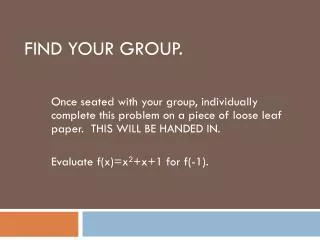
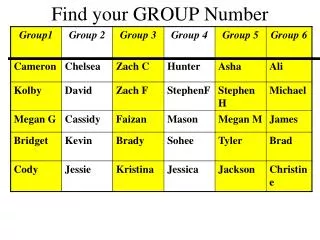
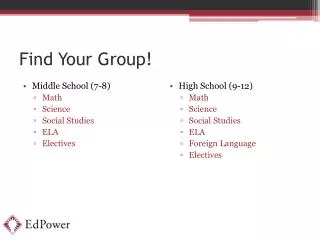
Find Your Group! • Middle School (7-8) • Math • Science • Social Studies • ELA • Electives • High School (9-12) • Math • Science • Social Studies • ELA • Foreign Language • Electives
UbD in Practice Teacher Institute Summer 2012 Jackie Gantzer Tyra Seldon Demetrice Smith
Warm-Up • In your groups, recall the stages of UbD and provide a brief description of each stage. • Self-Assessment • Any unanswered questions?
Reminders • Please review your deliverables in the back of your binder. • Your first unit plan is due on July 30, 2012!
Objective • To review and practice UbD in order to create and implement an effective standards based unit plan.
3 Stages of “Backward” Design • Identify desired results • Determine acceptable evidence • Plan learning experiences & instruction. Then and only then
Stage 1- Identify Desired Results • Consists of four components • Content Standards • Understandings • Essential Questions • Knowledge and Skills • Key: Focus on Big Ideas!
Established Goals • Formal, long-term goals, such as state content standards, district program goals, departmental objectives, and exit-level outcomes. • Example: 2D—Students analyze cultural interactions among diverse groups (consider multiple perspectives). –National Standards for US History, p. 108
Understandings: The Big Ideas • To determine the Big Ideas for your unit or course, ask yourself… • Why? So what? • How is _____ applied in the world beyond the classroom? • What couldn’t we do if we didn’t understand _____? • Avoid truisms, facts, definitions! • Example: Students will understand that the settlement of the West threatened the lifestyle and culture of Native American tribes living on the plains.
Essential Questions • Are arguable and important to argue about. • Recur--and should recur--in professional work, adult life, as well as in the classroom inquiry. • Raise more questions-provoking and sustaining engaged inquiry. • Can provide purpose for learning. • Example: Who were the winners and who were the losers in the settlement of the West?
Knowledge and Skill • Students will know… • Example: Key factual information about Native American tribes living on the plains and their interactions with the settlers. • Students will be able to… • Example: Express their findings orally and in writing.
Stage 2 - Assessment Evidence • What are key complex performance tasks indicative of understanding? • What other evidence will be collected to build the case for understanding, knowledge, and skill. • How will students self-assess?
Assessment Types • Traditional • quizzes& tests • paper/pencil • selected-response • constructed response • Performance tasks • & projects • open-ended • complex • authentic Worth Being Familiar With Important To Know & Do Big Ideas Worth Understanding
Stage 2 is the essence of backward design & alignment!! • “Measure what we value; value and act on what we measure.” • Link assessment types to curricular priorities • Example: Imagine that you are an elderly tribal member who has witnessed the settlement of the plains by the “pioneers.” Tell a story to your 8-year old granddaughter about the impact of the settlers on your life.
Stage 3-Plan Learning Experience and Instruction • A focus on engaging and effective learning, “designed in”: • What learning experiences and instruction will promote the desired understanding, knowledge and skill? • How will you prepare students for the assessments?
Organize by W.H.E.R.E.T.O. • W = Where are we headed? and why? (from the student’sperspective) • H = How will the student be ‘hooked’? • E = What opportunities will there be to be equippedand explore key ideas. • R = How will we provide opportunities to rethink, rehearse, refine and revise? • E = How will students evaluatetheir own performance? • T = How will we tailor the work to reflect individual needs, interests, and styles? • O = How will we organize the work flow to maximize in-depth understanding and success at summative tasks?
Your Task • With your content cohort, select a content goal to begin the UbD planning process. • https://learningconnection.doe.in.gov/standards • You may use the template in your binder or the electronic version at edpower.pbworks.com • Use the UbD stages to complete your first unit plan! • Be prepared to share your ideas!
Uploading UbD to Wiki • Save your file as LastName-SubjectUbD1 • Ex: SmithScience8UbD1 • Visit edpower.pbworks.com • Request access in order to upload your UbD Unit Plan to the wiki • Select the UbD Unit Plans link on the front page
Share http://blog.dothegreenthing.com/wpcontent/uploads/2011/11/share.jpg
Curriculum Expectations • Scope and Sequence • Resource: Planning Calendar • Unit Plans/Backwards Planning • Resource: Aligned Assessments • Learning Ladders or Lesson Plans • Note: Should be submitted to Atlas two weeks in advance for feedback. • Reflection*
Pedagogy • Uncommon Schools Taxonomy • No Opt Out • 100% • Whole Brain Teaching • Four Core Techniques • Five Rules • Writing Across the Curriculum • Culturally Relevant
Observations of Implementation • Curriculum Team Observations • School Instructional Leader Observations • Mini-Observations (Informal) • Formal Full-Period Observations • Professional Growth Plans • Evaluations • Peer/Mentor Feedback
Tools • Power School • Daily Assessment Data • Atlas Curriculum Mapping • Document and analyze standards
Human Resources • Dr. Dina Stephens, Chief Academic Officer • Ms. Annette de la Llana, Elementary Curriculum Specialist • Ms. Jacqulyn Gantzer, Director of Assessments • Dr. Tyra Seldon, ELA Curriculum Specialist • Ms. Demetrice Smith, STEM Curriculum Specialist
Take Aways • Self-Assessment • What essential knowledge have you gained from today’s session? • What further questions do you have about UbD? • Are you prepared to submit your first unit plan? What needs to be refined?
UbD Office Hours • Wednesday, 4PM to 6PM • Location: MPR
References • Adapted from: 2005. Wiggins, Grant and McTighe, J. Understanding by Design. Upper Saddle River, NJ: Prentice Hall Inc.