Mastering Decimal Operations: Addition, Subtraction, and Multiplication Techniques
50 likes | 197 Vues
This resource focuses on advanced techniques for adding, subtracting, and multiplying decimals, tailored for students. It includes practical applications through engaging word problems that illustrate real-life scenarios, such as filling bottles with bubble bath, purchasing groceries, and calculating sales tax on school supplies. Students will practice these skills in their journals, reinforcing their understanding of decimal operations and making connections to everyday situations. An exit question prompts reflection on the similarities and differences in decimal operations.


Mastering Decimal Operations: Addition, Subtraction, and Multiplication Techniques
E N D
Presentation Transcript
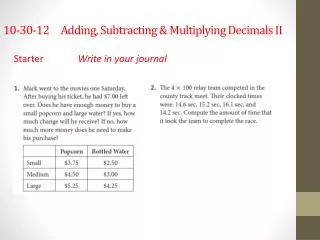
10-30-12 Adding, Subtracting & Multiplying Decimals II Starter Write in your journal
Application/Connection GIFTS 1. Colin is filling 4.5 ounce bottles with lavender bubble bath that he made for gifts. He was able to fill 7.5 bottles. How many ounces of bubble bath did he make? GROCERY 2. Iona’s favorite peaches are $2.50 per pound at the local farmers’ market. She bought 3.5 pounds of the peaches. How much did she spend? SHOPPING 3. Jennifer is buying new school clothes. The items she wants to buy add up $132.50 before sales tax. Sales tax is calculated by multiplying the total amount by 0.08. What is the amount of sales tax for the items?
Exit Explain how you add and subtract decimal. Is it the same for multiplying decimals? Why or why not?