Understanding Normal Distribution and Binomial Probability Calculations
This comprehensive guide explains normal distributions and binomial probabilities with practical examples. It covers crucial concepts such as calculating probabilities for intervals, determining the likelihood of events in a normal distribution with given means and standard deviations, and applying binomial probability formulas to real-world scenarios. You'll explore problems like finding the probability of waiting times at a bank and assessing side effects in medical studies. Perfect for statistics students, this resource aims to clarify and enhance understanding of these important statistical concepts.

Understanding Normal Distribution and Binomial Probability Calculations
E N D
Presentation Transcript
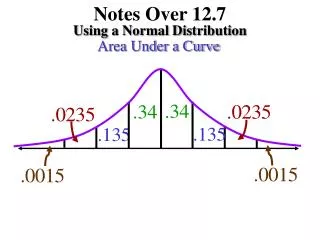
Notes Over 12.7 Using a Normal Distribution Area Under a Curve
Notes Over 12.7 Using a Normal Distribution A normal distribution has a mean of 80 and a standard deviation of 7. Find the probability that a randomly selected x-value is in the given interval. 1. between 66 and 87
Notes Over 12.7 Using a Normal Distribution A normal distribution has a mean of 80 and a standard deviation of 7. Find the probability that a randomly selected x-value is in the given interval. 2. at most 94
Notes Over 12.7 Using a Normal Distribution 2. The waiting time for drive through customers at a certain bank during the busiest hours is normally distributed with a mean of 8 minutes and a standard deviation of 2 minutes. What is the probability that the next two customers will wait longer than 8 minutes?
Notes Over 12.7 Finding a Binomial Probability A scientist claims that 18% of all patients with high blood pressure have negative side effects from a certain kind of medicine. There are 120 patients in a random study. 4. What is the probability that you will find at most 30 patients with negative side effects?
Notes Over 12.7 Finding a Binomial Probability A scientist claims that 18% of all patients with high blood pressure have negative side effects from a certain kind of medicine. There are 120 patients in a random study. 5. What is the probability that you will find at least 18 patients with negative side effects?