Exploring Sponges and Cnidarians: Invertebrate Wonders of the Sea
140 likes | 162 Vues
Dive into the fascinating world of sponges and cnidarians - two unique groups of invertebrates found in marine habitats. Learn about their anatomy, feeding habits, regeneration abilities, and diverse species. Discover the beauty and complexity of these sea creatures!


Exploring Sponges and Cnidarians: Invertebrate Wonders of the Sea
E N D
Presentation Transcript
Invertebrates Sponges & Cnidarians
Sponges • Kingdom: Animalia • Phylum: Porifera (sponges) • Simplest invertebrates • Asymmetrical (no symmetry!) • No tissues, gut or nerves
How Do Sponges Eat? • Filter feeders: feed on tiny plants and animals • Water carries food into the sponge through pores (ostia) • Ostia: holes on the outside of the body • Inside the sponge, collar cells remove food from the water • Collar cells: special cells that line the central cavity of the sponge; they digest food • The water exits through an osculum • Osculum: hole at the top of the sponge
Sponge Anatomy • Where does the water enter? • Where does the water exit? • What structure on the collar cells pushes the water up?
Body Part Abilities • If a part of a sponge is broken off, the missing part can regenerate, or grow back • If a sponge is broken into pieces, new sponges could form from each piece • If you force a sponge body through a strainer, the separated cells could come back together and reform the same sponge!
Kinds of Sponges • All live in the water (most in salt water) • Come in different shapes/sizes • Most sponges have a skeleton made of hard fibers called spicules • Grouped by their type of skeleton • Barrel sponge • Tube Sponge • Finger Sponge • Vase Sponge
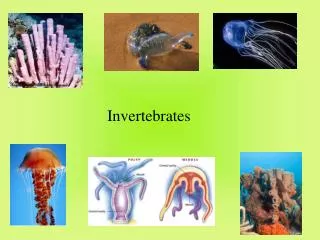
Cnidarians • Pronounced “nigh-dare-e-ins” • Kingdom: Animalia • Phylum: Cnidaria • Invertebrates that have stinging cells • More complex than sponges • Have complex tissues, a gut & simple nerves • Include: jellyfish, hydrozoa, sea anemones and coral
Two Body Forms • Cnidarians have ONE of the two body forms: • Medusa: swim through the water • Polyp: attach to a surface • Some change forms at different times in their life
Special Cells • All cnidarians have tentacles covered with stinging cells • Nematocysts: stinging cells that release spears into an organism when it brushes the tentacles • Some can release poison • Used for protection and to catch food
Kinds of Cnidarians **We split them into four classes: Kingdom: Animalia Phylum: Cnidaria Class: Hydrozoa Scyphozoa Anthozoa Cubozoa
Hydrozoans • Hydra, Portuguese Man-o’War • Hydra are always polyps (attached) • Live in fresh and salt water • Many live in colonies
Scyphozoans • Jellyfish • Catch other inverts and fish in tentacles • Spend most of their life as a medusa
Anthozoans • Sea Anemones and Corals • Spend their lives as polyps • Often brightly colored • Live in colonies
Cubozoans • Are square shaped when viewed from above • Resemble true jellyfish • Have well developed eyes • Are one of the most deadliest animals in the ocean