Challenges to the Peace Process: Analyzing the Madrid Conference and Post-Oslo Developments
150 likes | 271 Vues
The Peace Process between Israel and Palestine has faced numerous challenges since the Madrid Conference in 1991 aimed at ending the Israeli occupation of the West Bank and Gaza. Key issues include the status of Jerusalem, the Palestinian refugee problem, and the expansion of Israeli settlements. The Oslo Agreement in 1993 marked a significant step towards peace but encountered opposition from both sides, leading to fluctuating settlement populations and ongoing tensions. This analysis explores the complexities surrounding bi-lateral negotiations, Palestinian self-government, and the enduring quest for a secure resolution.


Challenges to the Peace Process: Analyzing the Madrid Conference and Post-Oslo Developments
E N D
Presentation Transcript
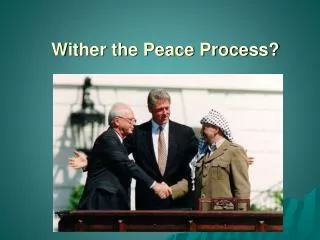
Palestinian Delegation at MadridHanan Ashrawi / Haider Abdel Shafi
Madrid Conference (1991) Aim To establish a framework for implementation of UN Resolution 242 * * end to Israeli Occupation of West Bank / Gaza * settlement of the Palestinian Refugee Problem * Peace within secure and recognized borders * negotiations for a framework to end the conflict Means Bi-lateral talks between the parties
Withdrawal from Occupied Territories (OT) Palestinian Self Government in OT Interim Palestinian Self Government / PA Permanent Status Negotiations Oslo Agreement (1993)Declaration of Principles
Oslo Permanent Status Negotiations • Palestinian Refugees [UN Resolution 194 / 242] • Jerusalem • Israeli Settlements • Borders of Israel
Reaction in Israel Knesset Vote: 61 Votes in Favor 50 Votes Opposed / 9 Abstentions
Palestinian Reaction to Oslo In Favor: PLO / Fatah Opposed: Hamas, Islamic Jihad
ISRAELI SETTLEMENT POPULATION(Oslo Years) 1991 1993 1995 1998 2000 ---------------------------------------------------------------- WB 90,300 111,600 133,200163,300 192,776 EJ 137,300 152,800 157,300 165,967 172,250 GZA 3,800 4,800 5,300 6,100 6,678 Total 232,400 268,200 295,800 335,367 371,704 % change 1991/2000 = + 62.5% http://www.fmep.org/settlement_info/settlement-info-and-tables/stats-data/comprehensive-settlement-population-1972-2006