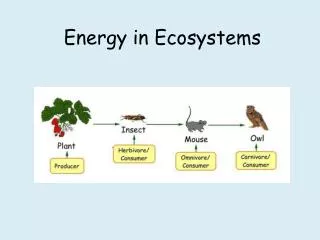
Energy in Ecosystems
220 likes | 384 Vues
Engage in a rapid exploration of ecosystems through dynamic activities. In just three minutes, create multiple food chains using provided cards, then note your findings. Transition to constructing a food web, matching organisms to their ecological roles (predators, consumers, producers). Investigate the impact of species removals, like barnacles and dog whelks, on interconnected populations. Learn about the recent reintroduction of beavers in Scotland and its effects on ecosystem balance, while examining competition among organisms for resources.


Energy in Ecosystems
E N D
Presentation Transcript
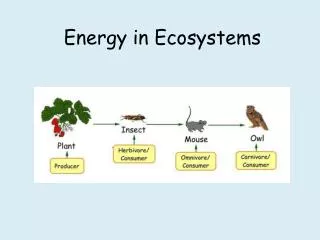
Against the clock! Using the cards at your table produce as many different food chains as you can in 3mins!
Match the words to organisms in your food web.. Predator Primary Consumer Producer Omnivore Herbivore Secondary Consumer Carnivore Prey
Now try.... The Ecosystems wordbank and questions on page 17 of Torrance.
Watch this clip... • Can you see a food chain? http://www.bbc.co.uk/programmes/p017kcc4
What will happen if the barnacles are removed? There will be fewer Blenny There will be more zooplankton
What will happen if the dog whelks are removed? There will be fewer Crabs As they will have less food
What will happen if the dog whelks are removed? There will be more limpets and mussels As they will not be eaten by dog whelks
What will happen if the dog whelks are removed? There will be fewer Periwinkles As the crabs will have to eat more of them
Choose another organism, and explain the consequences of it was removed
Re-introduction of Beavers Recently, beavers have been re-introduced to Scotland. Your task is to investigate how this re introduction will affect the ecosystem as a whole.
2.3 Success Criteria • Relate the issue to the Key Area (Plant and Animal Interdependance) • Describe the biological issue. • Describe the effect of this issue on the ecosystem.
What do organisms compete for in their environments? Animals Plants WFS WLN
Competition Investigation What factors might affect how well seeds germinate?