Effective Management Strategies for Western Corn Rootworm: Importance of Crop Rotation
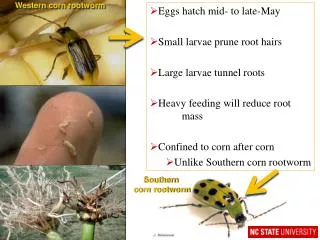
Western corn rootworm (WCR) larvae pose significant threats to corn crops, particularly from mid- to late-May when eggs hatch. Small larvae begin pruning root hairs, while larger larvae tunnel into roots, leading to reduced root mass and weakened plants. Management is essential, with crop rotation being a key strategy to disrupt WCR life cycles. Other influencing factors include moist soil conditions, reduced tillage, and high pest pressure. Understanding adult behavior and larvae development can aid in effectively mitigating their impact on corn production.

Effective Management Strategies for Western Corn Rootworm: Importance of Crop Rotation
E N D
Presentation Transcript
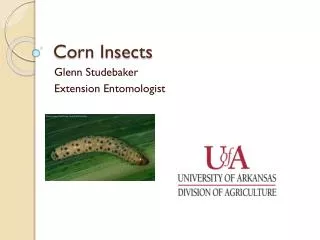
Western corn rootworm • Eggs hatch mid- to late-May • Small larvae prune root hairs • Large larvae tunnel roots • Heavy feeding will reduce root mass • Confined to corn after corn • Unlike Southern corn rootworm Southern corn rootworm
Other Factors Affecting Abundance • Moist Soil • Reduced tillage • High historical pest pressure • High litter/mulch levels • Routine manure applications Rotation is the most useful management tactic for Western Corn Rootworm
Why Rotate From Corn? Adults eat silk, pollen and foliage, then mate Adults lay eggs in soil during the summer/fall Larvae hatch mid- to late-May Pupate during June Must feed on corn to survive
Alternatives to Rotation Source: IPM Corn Insect, Disease, Nematode and Weed Control Recommendations for 2010 Alabama Cooperative Extension Center
Alternatives to Rotation Source: IPM Corn Insect, Disease, Nematode and Weed Control Recommendations for 2010 Alabama Cooperative Extension Center