Download
1 / 13
130 likes | 252 Vues
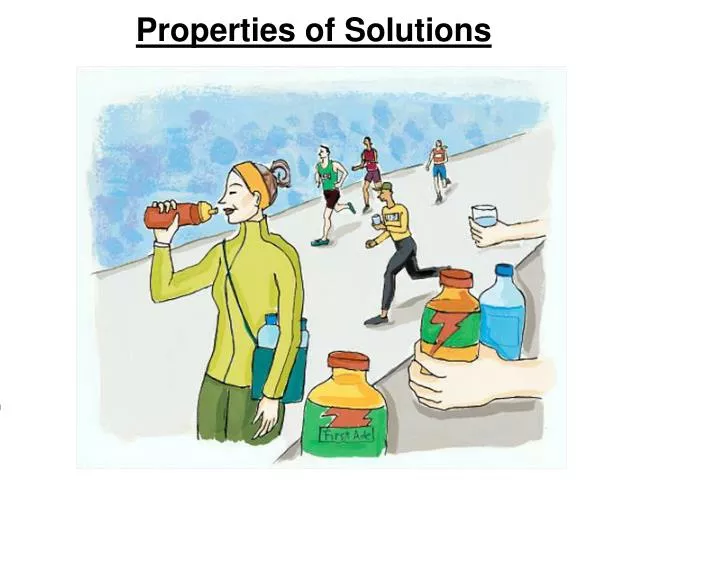
This resource delves into the properties of solutions, focusing on the roles of solutes and solvents. A solute is the substance that dissolves, such as sugar in soda and salt in water, while the solvent is the medium in which it dissolves, typically water. The document covers the solution process, highlighting factors like temperature, agitation, surface area, and pressure that influence solubility. It emphasizes the principle of "like dissolves like," and provides insights into how to create effective thinking maps for summarizing key concepts related to solutions.

E N D
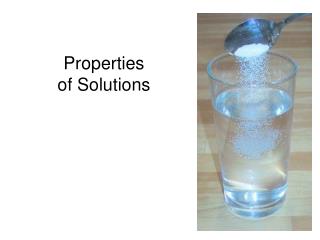
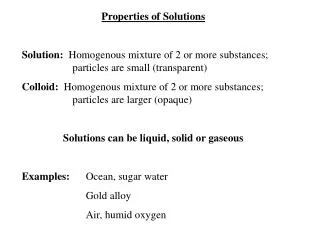
Standard 6a Solute A solute is the dissolved substance in a solution. Sugarin soda drinks Saltin salt water Carbon dioxide in soda drinks ·Solid in Solid-Liquid mixtures ·The lesser amounts in liquid-liquid mixtures ·gas in gas-liquid mixtures
Solvent Standard 6a A solvent is the dissolving medium in a solution. Waterin salt water Waterin soda ·Liquid in Solid-Liquid mixtures ·The larger amounts in liquid-liquid mixtures ·Liquid in gas-liquid mixtures Water is the universal solvent!!!
“The Solution Process” Standard 6b What causes solute and solvent to become a solution? Caused by the random molecular motion of the solvent http://www.learnerstv.com/animation/animation.php?ani=122&cat=chemistry
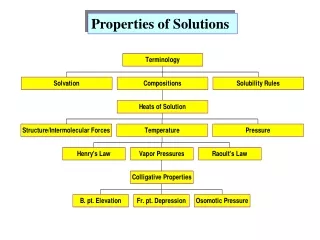
Standard 6c “Factors that Affect the Solution Process” Temperature Agitation (stirring) Surface Area Pressure ( in gas and liquids)
Solubility ·the ability of substance to dissolve ·amount of solute that can dissolve in 100g of water
Solubility Trends Solids tend to dissolve best when: · Heated · Stirred · Ground into small particles Gases tend to dissolve best when: · The solution is cold · Pressure is high
“Like Dissolves Like” Nonpolar solutesdissolve best in nonpolar solvents Polar and ionic solutesdissolve best in polar solvents
Homework: Create "Thinking Maps" for the Lecture and use that to write a short summary of the Lecture