Employee Benefits
Employee benefits have evolved significantly, originally used to circumvent wage controls during WWII. Today, they encompass a range of perks like health insurance, paid leave, and retirement plans, alongside individual responsibilities like managing sick leave. Key elements include medical coverage, severance pay, and employee assistance programs aimed at improving well-being. As the workforce diversifies, flexible work arrangements and support for mental health are gaining importance. Understanding these benefits is crucial for employees and employers navigating their implications in today’s labor market.

Employee Benefits
E N D
Presentation Transcript
History • Used to circumvent wage controls during WWII. • A perk • A right • Back to individual responsibility
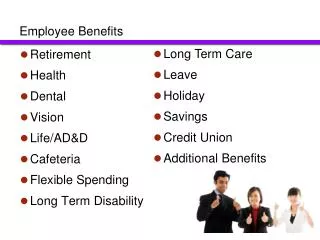
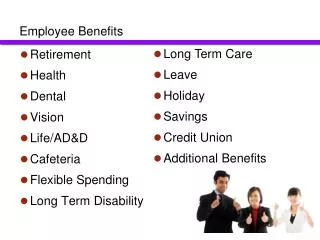
Pay for Time Not Worked • Unemployment • Vacations and Holidays • Sick Leave • Parental & Family Medical Leave • Unpaid • May require use of sick leave • Medical coverage continues • Severance Pay • Supplemental Unemployment Benefits • Auto Workers
Insurance • Worker’s Compensation • Monetary or Medical • Hospitalization, Health and Disability Insurance • Rx, Life Insurance, Dental • Cost reduction • Employee Partial Pay (premium and medical bill) • Outsourcing (administration and even treatment) • Mental Illness • 34 Million people in USA suffer • 24% of disabilities • Part-time and Contingent Workers
Retirement • Social Security • Widow and Orphans Act • Premium would never be increased (FDR) • Pensions • Defined Benefits • Defined Contributions • 401K • Deduct before taxes • ERISA (Employee Retirement Income Security Act) • Vesting • Age • Funding • Benefit • Early Retirement
Personal Services • Employee Assistance Program • Child Care • Domestic Partners • Flexible Work Arrangements • Job Sharing • Telecommuting • Compressed work weeks
Cost out of Control • 35 – 47 percent