Understanding the Process of Mitosis: Stages and Importance
200 likes | 372 Vues
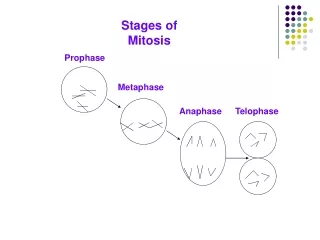
Explore the intricate process of mitosis, where a single cell divides into two identical cells. This guide covers the five key stages: Interphase, Prophase, Metaphase, Anaphase, and Telophase. During Interphase, DNA is replicated, and during Prophase, chromatin condenses into chromosomes. Metaphase sees chromosomes align at the cell's center, followed by Anaphase, where sister chromatids separate and move to opposite poles. Finally, Telophase reverses Prophase, leading to cytokinesis, and resulting in two new cells. Understanding mitosis is essential for recognizing normal growth and the implications of uncontrolled cell division, like cancer.


Understanding the Process of Mitosis: Stages and Importance
E N D
Presentation Transcript
The Process of Mitosis By Russell Clarida
Interphase #1 • DNA is spread out as Chromatin • Nuclear membrane is visible • Nucleolus is visible • DNA is copied during “S” portion of Interphase Nuclear Membrane Chromation Nucleolus
Interphase • DNA is spread out as Chromatin • Nuclear membrane is visible • Nucleolus is visible • DNA is copied during “S” portion of Interphase
Prophase (dividing) #1 • Chromatin scrunches into Chromosomes • Nuclear membrane/nucleolus disappear • Spindle fibers appear • Centrioles appear next to nucleus toward poles Centrioles Chromosomes Spindle Fibers
Prophase (dividing) • Chromatin scrunches into Chromosomes • Nuclear membrane/nucleolus disappear • Spindle fibers appear • Centrioles appear next to nucleus toward poles
Prophase (dividing) • Chromatin scrunches into Chromosomes • Nuclear membrane/nucleolus disappear • Spindle fibers appear • Centrioles appear next to nucleus toward poles
Prophase (dividing) • Chromatin scrunches into Chromosomes • Nuclear membrane/nucleolus disappear • Spindle fibers appear • Centrioles appear next to nucleus toward poles
Metaphase (middle) #1 • Chromosomes line up in middle of cell
Metaphase (middle) • Chromosomes line up in middle of cell
Metaphase (middle) • Chromosomes line up in middle of cell
Metaphase (middle) • Chromosomes line up in middle of cell
Anaphase (apart) #1 • Chromatid arms separate and move to opposite ends of cell Chromatid arms
Anaphase (apart) • Chromatid arms separate and move to opposite ends of cell
Anaphase (apart) • Chromatid arms separate and move to opposite ends of cell
Anaphase (apart) • Chromatid arms separate and move to opposite ends of cell
Anaphase (apart) • Chromatid arms separate and move to opposite ends of cell
Anaphase (apart) • Chromatid arms separate and move to opposite ends of cell
Telophase #1 • “Reverse prophase” with two nuclei • Chromosomes spread out as Chromatin • Nuclear membrane/nucleolus return • Spindle fibers disappear, Centrioles disappear
Cytokinesis • Breaks into two cells
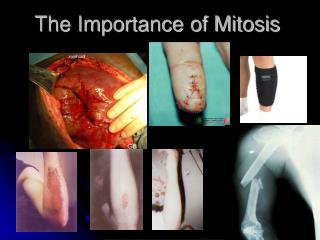
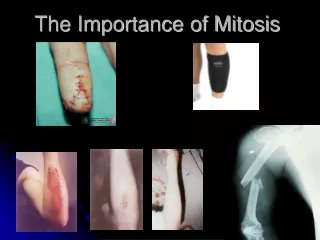
Importance • This process is something that every cell in every animal goes through to reproduce. This allows us to grow and build our bodies. However, this growth can be bad if uncontrolled, like Leukemia and lymphoma.