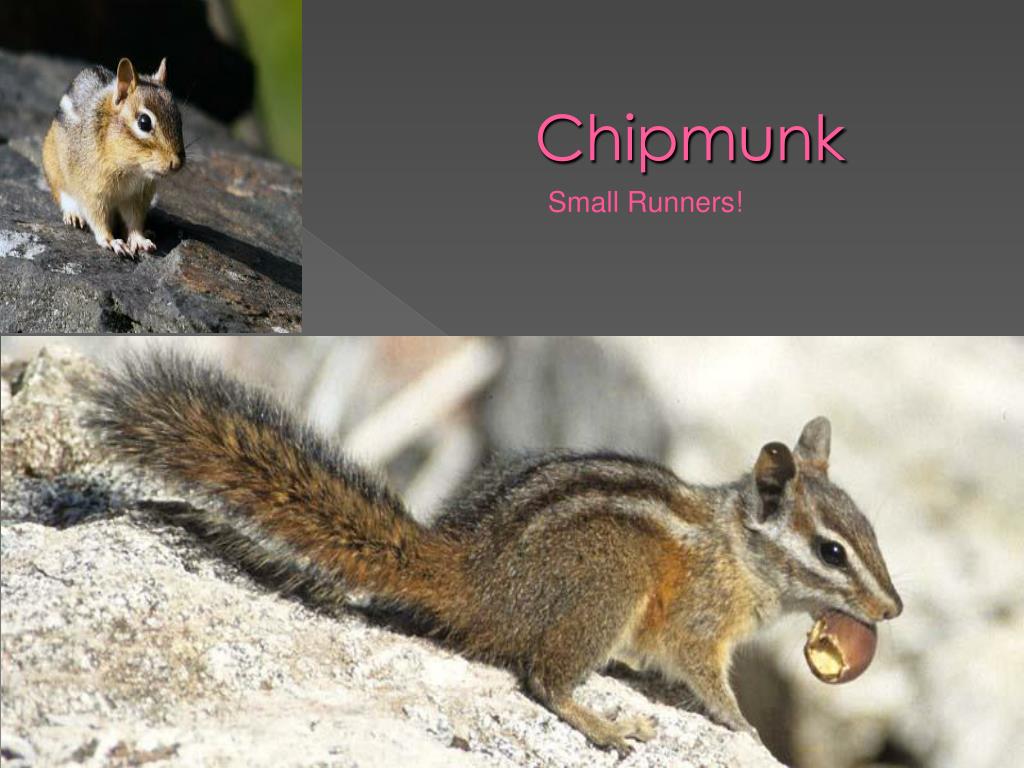
Chipmunk Small Runners!
Species • Eastern Chipmunk is called Tamias Striatus • Part of the Squirrel family • Eastern Chipmunk is one of 25 different species of chipmunks
What They Look Like • Reddish brown with 5 black stripes down their back, outlining a white stripe on each side • White stripe above their eyes • Small ears, dark eyes and a small nose • Adults measure 5-6 inches long, 2.8-3.2 ounces
What Chipmunks Eat • Nuts and seeds • Fruits and vegetables • Sometimes eat worms, eggs, small birds, mice, frogs and small snakes
Habitat • Found in forests ranging from Southern Canada to the Gulf of Mexico, except for parts of the Southeast. • Make their burrows in forests and in suburban yards and city parks
Burrows • Entrance to the burrow is 1.5-2 inches big • Burrow is 10-30 feet underground • They use lots of grasses ,sticks and dry leaves • Their burrows are lined with 6 to 8 inches of grass • A chipmunks burrow has no mound of dirt around it to attract predators • Burrows have several chambers for sleeping, eating, storing food and going to the bathroom
Hibernation • Chipmunks are not real hibernators, but they stay in their burrows during Winter • Body temperature and heart rate slows down • They wake up every 2 or 3 days to eat and defecate • Chipmunks hibernate from late October until March or April
Mating • Eastern chipmunks mate twice a year • March to Early April June to mid-July • Females are pregnant for 31 days • Males do not help raise young
Young • Two to five are born in a litter • They are hairless and blind • They open their eyes at 3 weeks old • They come out of burrow for the first time at 40 days old • Two weeks later, the mother refuses to let them back into burrow, and they are on their own
Behavior • They spend their days gathering nuts and food • They are “diurnal,” which means active during the day • They store food in their burrow for the winter • They are solitary except for when they mate • Males chase and sometimes bite each other to compete for females
Communication • They are vocal animals • They make “chips” and “chip trills” • They also make soft “cuk-cuk-cuk” sounds • Sounds warn of predators • Males make noises when they compete for females
Predators • Chipmunks can live to 8 years, but most only survive 2-3 years • Their many predators include owls , hawks, coyotes , foxes , martens • Also bobcats, raccoons, red squirrel
How They Survive • Their color helps them blend into surroundings • Chipmunks are agile and fast so they can escape predators • Their small size lets them hide in rock walls and small spaces • Safe during Winter because they stay in their burrows • Their noises warn other chipmunks of danger
Physical Adaptations • Their reddish tan and brown color helps them blend into their habitat which is sticks, trees, woodchips, dead leaves, grass and dirt. • Their size helps them hide in small places
Behavioral Adaptations • Their “chips”, cuk-cuk-cuk” sounds warn other chipmunks of danger. • They are very speedy animals which helps them survive in their habitat by
Physiological Adaptations • Chipmunks have cheek pouches to help them carry large amounts of food • Chipmunks have excellent hearing, eyesight and sense of smell which helps them avoid predators
Interesting Facts • Chipmunks have burrows with different rooms for Eating, Sleeping and storing food • Chipmunks cover the open of their burrows with leaves and sticks • They store up to 8 pounds of food