Download
1 / 11
110 likes | 249 Vues
This text explores the potent visual imagery of the Age of Augustus and its role in communicating political ideologies. Focusing on key figures like Gaius Octavius (Augustus), Marcus Antonius, and Cleopatra, it analyzes how images reflected competing narratives in the late Republic. By examining literary evidence and iconographic symbols, the text illuminates the ideological battles and the intended messages for various audiences. The unifying themes among Augustus and his supporters and those of his rivals are also discussed, revealing the complex interplay of power and representation in Roman society.

E N D
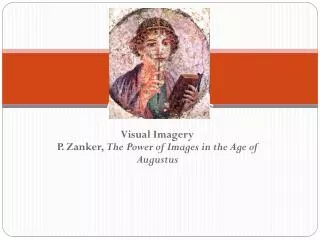
Age of Augustus Visual ImageryP. Zanker, The Power of Images in the Age of Augustus
From Carthage to Greece:Rome conquers most of the Mediterranean
From the conquest of the Mediterranean to civil war: the rise of warlords • 133: socio-economic revolution: Tiberius Sempronius Gracchus and Gaius Gracchus • Gracchi (optimates – appeal to aristocratic rule) cater to the masses (populares – appeal to popular support) • 107-87: Gaius Marius: growth of professional army and rise of populares • 91-89: Social War – for civitas (“citizenship”) in Italy • 89-65: wars against Mithridates VI of Pontus (Black Sea) • 90-78: L. Cornelius Sulla: reign of terror; proscriptions; return to power of optimates • 70: Pompey and Crassus hold the consulship and reverse Sulla’s program of reform
From Sulla to Actium: civil war, and the beginning of the end • Contenders for control of the Republic: • 84-53: Marcus Licinius Crassus (71: ends Spartacus’ slave revolt; 53: killed by the Parthians at Battle of Carrhae and loses legionary standards) • 78-44: Gaius Iulius Caesar (58-51: pacifies Gaul) • 70-48: GnaeusPompeius Magnus (67: “Pompey the Great” defeats the pirates) • 70-43: Marcus Tullius Cicero (43: killed by Antony’s troops) • 63: Catilinarian Conspiracy (L. SergiusCatilina; Cicero’s senatusconsultumultimum) • 63: birth of Gaius Octavius
Gaius IuliusCaesar: imperator, parenspatriae, consul V (59, 48, 46, 45, 44) and dictator perpetuus (100-44 BCE)
Age of Augustus Roman Culture in the Age of the Republic, 753-31 BCE
Social systems • community (to Cicero, communioor communitas) • languages & literacy • public vs. private (domus, villa) places: • forum, temples, markets, lawcourts, arenas, amphitheaters, mausoleums, baths, gymnasiums, taverns, bakeries, brothels, aqueducts, roads, bridges • cultural achievements – see above, plus literature (history, poetry, biography, letters), architecture, city planning, sculpture, wall painting, pottery • social & military organization • respect for the dead – mores maiorum (“traditions of our ancestors”)
Social systems • patronage: patrons (patronii) and clients (clientes) • liberation from monarchy • law & equality • class struggle: • patricii (“patricians”) vs. plebes (“plebeians”) • optimates vs. populares(appeal to aristocracy vs. appeal to masses) • cursushonorum (“rank of honors”): • quaestor($), praetor (courts), consul(2 chief magistrates), censor(morals) • senatus/ senatores (ex-mags., aristocratic body, 600-800, for life) • proconsules, propraetores (provincial governors: extortion) • tribuniplebum(“tribunes of the plebs”: populism) • quaestiones (“courts”: justice for the aristocracy) • comitiaeandconcilia (“assemblies” – putative democracy) • roles for women, children, young adults: gendered expectations
Value systems • civitas(“citizenship”) and cives (“citizens”) • conquest: warfare and diplomacy, aggression and alliance; professional army • sanction from the gods • expansion: strategic colonization; creation of provinciae (“provinces”) – provincial governors, taxation – in territories, monarchies, etc. • “Romanization,” assimilation of other cultures (esp. Greece: see Zanker) & foreign cult-worship • dignitas (“dignity”), fides (“loyalty”), honor (“honor”), pietas (“piety), clementia (“clemency”), libertas (“freedom”)
Economic systems • exploitation of natural and manmade resources • slave-based economy: latifundia(“estates”) • servi (“slaves”) vs. liberti (“freedmen”) • trade: shipping to every corner of empire, access to luxury goods • major commodities: grain, wine, oil, silk, incense, spices, glass, metals, clay (ceramics) • land reform: placating the poor and military veterans • equites (“equestrians” – business class) and publicani (“publicans” – tax-collectors) • professional army: careerism, conquest, extension of roads and Romanization, construction of cities: auxiliarii (“auxiliaries”) vs. legionarii (“legionnaires”)
Iconography and Ideology in the Late Republic, 44-31 BCE: “Rival Images” • The images depicted in these figures reflect the competing political ideologies of • Gaius Octavius (later Augustus) • SextusPompeius(son of Pompey the Great) • Marcus Antonius (Mark Antony), and • Cleopatra • What are the main themes and ideologies conveyed in these images? • What is the audience for these images supposed to understand, and what do their authors, or subjects, hope to achieve with these iconographic symbols? • How do the examples of literary evidence quoted by Zankersupport these ideologies? • Finally, what are the unifying themes that capture the ideologies of Octavius and his supporters? what are those of Antony & Octavia? Antony & Cleopatra?