Understanding the Equity Market: Key Characteristics and Organization
This guide provides an overview of the equity market, highlighting its fundamental characteristics, such as ownership interest and limited liability. It explains the organization of the equity market, detailing primary and secondary market functions, including initial public offerings (IPOs), private placements, and the role of trading in maintaining liquidity. Additionally, it addresses how investors can apply for shares through various methods. This comprehensive introduction is essential for anyone looking to understand equity investments and the market's operational structure.


Understanding the Equity Market: Key Characteristics and Organization
E N D
Presentation Transcript
By: Elson Equity Market
Introduction to Equity Market • General Characteristics of Equity • Represents Ownership Interest • Permanent Source of Long-Term Capital • No Maturity Date • Ownership Risk • Investment Returns Depends on Stock Market Prices
Introduction to Equity Market • Shareholders Entitlement • Residual Interest • Limited Liability • Control Via Voting Rights
Introduction to Equity Market • Definition of Market
Introduction to Equity Market • Characteristics of a Good Market 1) Information is TIMELY and ACCURATE 2) Transaction cost should be LOW 3) Information Efficiency 4) High Degree of Liquidity a) Marketability (Breadth) b) Price Continuity (Depth)
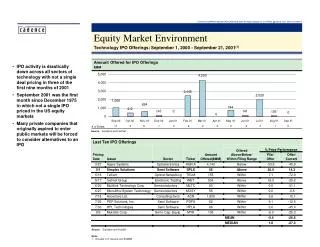
Organisation of Equity Market • Primary Market • Purpose: For companies to raise capital • Method of raising new Equity Capital • IPO • Private Placement • Rights Issue • Bonus Issue
Organisation of Equity Market • Method of Offering • Fixed Price Method • Private Placement • Book Building • Preferential Allotment
Organisation of Equity Market • Secondary Market • Purpose: Trading, Provides Liquidity to Shareholders • In Singapore • SGX Main Board • SGX Catalist • Differences between Exchange-Traded Marketand OTC Market
Applying for IPO Shares • Application forms with Cashier’s Order • ESA • Online application through Internet