SlideServe
Menu
Préférences
© SlideServe · v2026

Understanding Ethical Concerns in Decision Making**

luyu avatar
17 diapositives · 324 Views · Jul 24, 2014

In today's complex world, ethical considerations play a critical role in decision-making processes. This guide explores the essence of ethics, highlighting its importance for accountability, truth, and fairness. It covers key principles from the NSPA Code of Ethics, such as being responsible, honest, and minimizing harm. Delve into real-world cases illustrating ethical dilemmas such as deception, conflict of interest, and endangering lives. Learn effective strategies to analyze ethical concerns, ensuring your actions align with core ethical values.
Understanding Ethical Concerns in Decision Making** - slide 1
01 / 17Understanding Ethical Concerns in Decision Making**
1 / 17

Télécharger la présentation

Understanding Ethical Concerns in Decision Making**
Une image / un lien ci-dessous est fourni (tel quel) pour télécharger la présentation

Politique de téléchargement : le contenu du site vous est fourni TEL QUEL pour votre information et votre usage personnel ; il ne peut être vendu, concédé sous licence ni partagé sur d’autres sites sans l’accord de son auteur.Le contenu vous est fourni TEL QUEL, pour votre information et votre usage personnel uniquement. Téléchargez la présentation en cliquant sur ce lien. Lors du téléchargement, si vous ne parvenez pas à télécharger une présentation, l’éditeur a peut-être supprimé le fichier de son serveur.Pendant le téléchargement, si vous ne parvenez pas à obtenir une présentation, le fichier a peut-être été supprimé par l’éditeur.

F I N

Plus de contenu associé

Transcription de la présentation
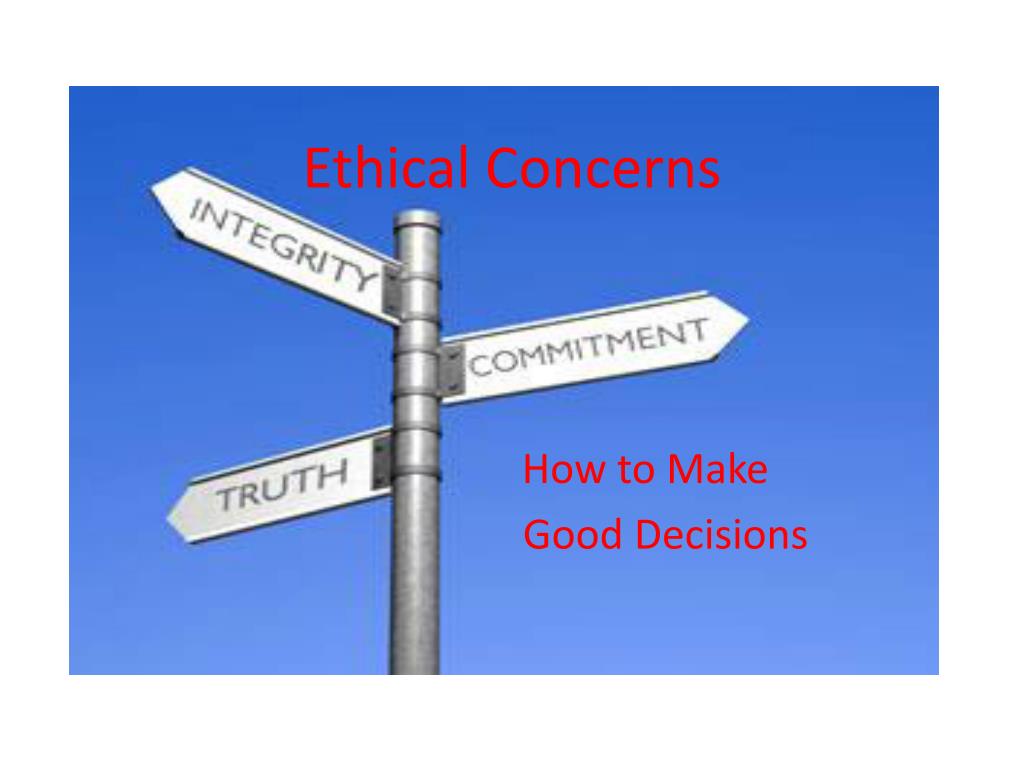
  1. Ethical Concerns How to Make Good Decisions

  2. Why Ethics Matter • Truth • Strings that come with obtaining the truth • Bottom line: Hard work!

  3. Recent Case No. 1

  4. Recent Case No. 2

  5. Recent Case No. 3

  6. One Way to Help The seven principles of the NSPA Code of Ethics are: Be Responsible. Be Fair. Be Honest. Be Accurate. Be Independent. Minimize Harm. Be Accountable.

  7. There’s Also Preventive Analysis • Who can get hurt and how? • What actions can cause harm? Which are yours? • What about those actions make you blameworthy? • Are you willing to accept the consequences of those actions?

  8. Regardless, beware 5-headed monster

  9. Concern 1: Deception • Lying or misrepresenting yourself to obtain information • Should you pose as a young boy online and invite potential pedophiles to meet you at a local bar (and then videotape the meeting)? • Do you take someone else’s quotes (from a magazine) and include them without attribution?

  10. Concern 2: Conflict of Interest • Accepting gifts or favors from sources or promoting pet social and political causes • Do you let a source buy you lunch? • Do you take free hot dogs at the press table? • Do you accept free CDs from record labels? • Do you interview your friends or relatives?

  11. Concern 3: Endangering Life • Publishing information without regard to it hurting someone or their livelihood • Do you take that call from the gunman who’s holding hostages? • Do you expose that organization’s wrongdoings despite the likelihood that someone will lose his/her job?

  12. Concern 4: Sourcing • Publishing information that will burn sources • How well can you protect that source? • Which source is more believable? • When should sources be anonymous? • Which source hurts the public? • Are you more enamored with having an unnamed source than you are with the truth?

  13. Concern 5: Bias • Slanting a story by manipulating facts to sway opinions • How diverse are your sources? • What view dominates among your sources? • Do you use suggestive phrasing? • Does the story frame/theme/approach exclude other, pertinent views or ideas?

  14. Seeding Ethical Basics • Utilitarian • Veil of ignorance • Golden mean • Absolutist • Antinomian • Situational

  15. Samples of What You Can Do • Review case studies • Iraq • Seattle cops • Ask for views (e.g., ethics survey) • Role play (e.g., p. 9, Ethics in Action) • Policy discussions (e.g., pp. 14-27)