

SlideServe
Menu
Préférences
© SlideServe · v2026

John D. Rockefeller

lynne avatar
15 diapositives · 1.2K Views · Jul 19, 2014

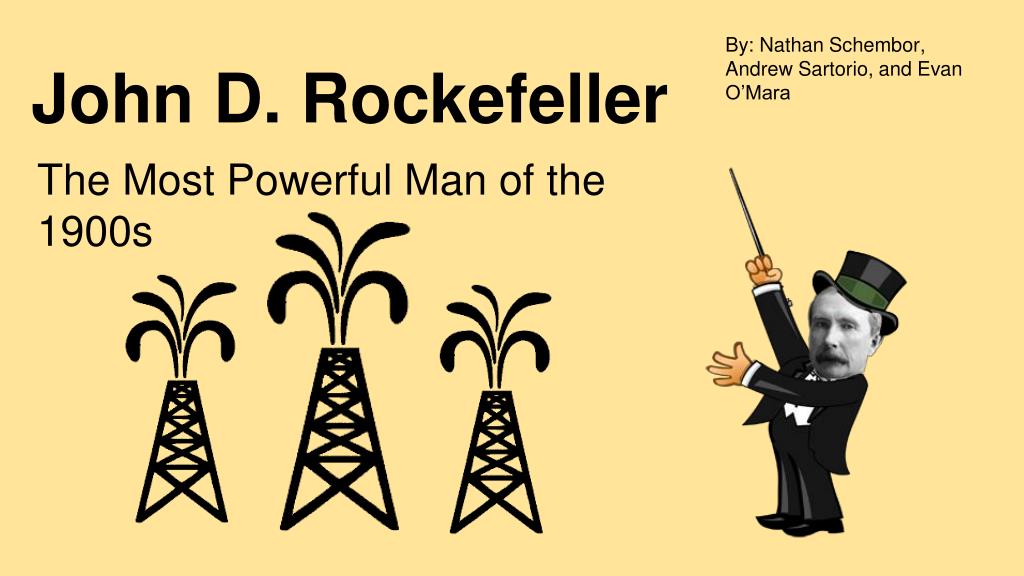
By: Nathan Schembor, Andrew Sartorio, and Evan O’Mara. John D. Rockefeller. The Most Powerful Man of the 1900s. Unchallenged Wealth and Political Influence. Rockefeller’s Immense Wealth. Net worth equaled over 1.5% of the American economy
John D. Rockefeller - slide 1
01 / 15John D. Rockefeller
1 / 17

Télécharger la présentation

John D. Rockefeller
Une image / un lien ci-dessous est fourni (tel quel) pour télécharger la présentation

Politique de téléchargement : le contenu du site vous est fourni TEL QUEL pour votre information et votre usage personnel ; il ne peut être vendu, concédé sous licence ni partagé sur d’autres sites sans l’accord de son auteur.Le contenu vous est fourni TEL QUEL, pour votre information et votre usage personnel uniquement. Téléchargez la présentation en cliquant sur ce lien. Lors du téléchargement, si vous ne parvenez pas à télécharger une présentation, l’éditeur a peut-être supprimé le fichier de son serveur.Pendant le téléchargement, si vous ne parvenez pas à obtenir une présentation, le fichier a peut-être été supprimé par l’éditeur.

F I N

Plus de contenu associé

Transcription de la présentation
  1. By: Nathan Schembor, Andrew Sartorio, and Evan O’Mara John D. Rockefeller The Most Powerful Man of the 1900s

  2. Unchallenged Wealth and Political Influence

  3. Rockefeller’s Immense Wealth • Net worth equaled over 1.5% of the American economy • Gained immense power through wealth - near complete control of oil nationwide, had investments in other companies, and political authority

  4. Oil • Oil was one of, if not the most, growing and in demand industries by the turn of the century • Rockefeller’s undisputed control of the industry through standard oil granted him power, could dictate prices and distribution, impacting the economy

  5. Monetary Influence • Lobbying • Substantial wealth allowed Standard Oil to lobby for drilling and shipping in the interests of the company

  6. Monetary Influence • Bribery • Had influence in the Pennsylvania state legislature • Positive reviews about Standard Oil’s beginning and current business sparked thoughts of corruption

  7. Capitalistic Expansion

  8. Vertical Expansion • Produced freight cars, warehouses, barrel factories and pipelines • Rockefeller never had to deal with other’s unstable prices • Secured product in industry by controlling all aspects of oil, from drilling to retail

  9. Exploitation of the Free Market • Government had no power over petroleum system monopolies • Newly industriallynation needed crude oil, • Rockefeller produced most of nation’s oil, could control prices

  10. Suppression of Competition Leads to a Monopoly

  11. Eliminating the Competition • Rockefeller’s ability to produce cheap and high quality oil attracted lots of business

  12. Eliminating the Competition [cont.] • Horizontal Expansion • Purchasing other oil companies made Standard Oil more powerful and removed competitors

  13. Monopolies • Unchallenged monopoly over the petroleum industry • After suppressing competition, Rockefeller allowed to control prices and nation’s oil, granting him an extremely profitable monopoly

  14. Conclusion In the late 19th century and early 20th century, the most powerful people in America monopolized their respective industries. John Rockefeller was able to accumulate a massive amount of money, becoming America’s first billionaire, through oil. Rockefeller took advantage of capitalism, which granted him influence upon his industry, including the ability to rapidly expand his business, and politics. Finally, Rockefeller’s ability to skillfully eliminate competition allowed him sole control of his business, making him powerful influence of the time. Rockefeller’s immense wealth, capitalist expansion, and monopolistic suppression of rival companies led to him to becoming the most powerful man in America.

  15. Sources • http://capitalism.org/antitrust/what-about-rockefellers-standard-oil/ • http://www.investopedia.com/articles/economics/08/jd-rockefeller.asp • http://www.history.com/topics/john-d-rockefeller