Download
1 / 7
70 likes | 169 Vues
Explore the downfall of President Nixon through the Watergate scandal in 1974, revealing the corruption, illegal activities, and abuse of power that led to his resignation. From the break-in at the Democratic National Headquarters to the subsequent investigations, immerse yourself in this critical moment in American history. Understand how the system of checks and balances ultimately prevailed, holding the administration accountable and ushering in an era of reform.

E N D
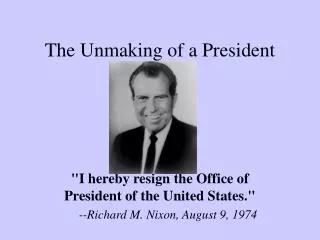
The Unmaking of a President "I hereby resign the Office of President of the United States." --Richard M. Nixon, August 9, 1974
Scandal at the White House • CREEP (Committee to Reelect the President). Accepted illegal contributions. Financed “dirty tricks”to discredit the Democratic opposition. • White House officials used the IRS to harass administration enemies. • Nixon’s Vice-presidential papers. Tax scandal.
The Biggie • 1972 break-in at the Watergate Apartments to steal documents and “bug” the offices of the Democratic National headquarters. • G. Gordon Liddy and E. Howard Hunt are arrested in the burglary.
Washington Post investigation. Deep throat. Senate investigations. Sam Ervin. Special prosecutors. Archibald Cox and Leon Jaworski. The tapes. Court rules on executive privilege. Key Points
Impeachment proceedings. Thirty people including cabinet officials were found guilty and given prison sentences. Ford pardons Nixon.
Significance. • Freedom of the press worked. • The two-party system worked. • Checks and balances worked. • Government by law worked. • Powers of the presidency were weakened and congressional power strengthened. • A reform era was ushered in.