George Washington & National Debt
180 likes | 315 Vues
Chapter 6 delves into the leadership of George Washington, America's first president, and his critical role in shaping the early government amidst financial turmoil. Elected in 1789, Washington set important precedents for the executive branch, influencing taxation, national banking, and diplomatic neutrality. His administration faced numerous challenges such as the Whiskey Rebellion and conflicts over the National Bank, highlighting tensions between federal power and states' rights. Washington's farewell address underscored the importance of unity, education, and fiscal responsibility for the new nation.


George Washington & National Debt
E N D
Presentation Transcript
George Washington & National Debt Chapter 6 – Section 1 & 2
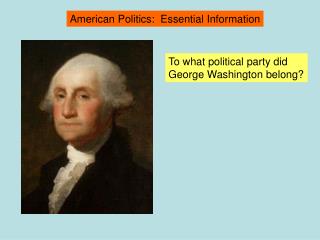
George Washington – 1st President - Washington– Very popular with the people - Electors from 11 states (Electoral College) met in 1789 to vote on President. - Washington Elected / John Adams Vice President
The New President - Set examples and traditions (precedents) for Executive Branch- 2 terms, American Cloth, “Mr. President”, farewell address, meet with cabinet regularly - Created 1st Cabinet- Alexander Hamilton, Secretary of Treasury and Thomas Jefferson – Secretary of State - Judicial Branch finalized (Judiciary Act 1789)
The New United States - 4 Million People in 1790 - Mostly farmers – wanted fair tax laws & to settle western lands - 1st Capital – New York City – 33,000 People
Alexander Hamilton Plan: - Pay foreign Debt, then Citizens (bond holders), and free up states to invest in building the economy--create good credit - Gain Revenue- Protective tariffs and bank interest - Stabilize- National Bank and National Mint (one single currency)
National Bank - National Bank is needed to Safely Deposit federal funds and stabilize the economic system - Make loans to government and businesses - States’ rights opponents didn’t think the bank was constitutional (Jefferson) - Limited bank to a 20 year charter
Jefferson’s Views -Against Strong Central Government -Supports and trusts the people (common man) to rule country *Supported Agriculture and Farmers *Lower Tariffs to keep costs low on products that farmers buy -Strict Construction- Against using the Elastic Clause to create a National Bank
Opponents to the Bank - Jefferson and Madison opposed idea - Constitution did not grant power to the federal government to create a national bank - Strict interpretation of Constitution – Can only do what the Constitution says
Supporters of the Bank - Hamilton – Loose Interpretation of Constitution (stretch the Elastic)- congress can do what Constitution does not forbid - Washington and Congress approved National bank in 1791
International Conflicts *The Neutrality Proclamation - Remained neutral during war between France and England *Jay’s Treaty- Settled disputes with England *Pinckney’s Treaty- Settled a dispute with Spain over The Port of New Orleans, territory, and borders
Domestic Conflicts *Battle of Fallen Timbers- fight with native Americans over western lands *Treaty of Greenville- forced the Natives to give up Northwest Territory to American settlers *Whiskey Rebellion- Washington personally enforces U.S. tax laws
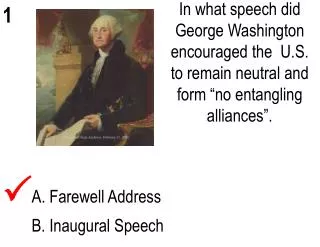
Farewell Address *Stay loyal to the union- don’t let anything come between you and your country *Always refer to yourself as an American *Use education to strengthen the country *Beware of political parties *Beware of close foreign alliances *Do not let our nation get into debt