Understanding NCAA Recruiting: Codes, Guidelines, and Important Milestones for Athletes
Discover essential insights into NCAA recruiting standards, ethical codes, and eligibility requirements across Divisions I, II, and III. This comprehensive guide covers how high standards of personal honor and fair play are maintained within the recruiting process. Learn about the necessary GPA, ACT/SAT requirements, and the testing process. Explore the significance of unofficial and official visits, recruitment strategies, and when to start engaging with coaches. Empower yourself with knowledge about NCAA regulations to navigate your athletic recruitment journey successfully.

Understanding NCAA Recruiting: Codes, Guidelines, and Important Milestones for Athletes
E N D
Presentation Transcript
NCAA and Recruiting Katie Diiro
Ethical Codes • 3.2.4.12 Standards. Active members agree to establish and maintain high standards of personal honor, eligibility and fair play. (D1 manual) • (G) Assure that the actions of coaches and administrators exhibit fairness, openness and honesty in their relationships with student-athletes; (D3 manual) • ARTICLE 10
Handbook • Division I is 444 pages • 30 question test is 60 minutes with 80% correct • Division II is 374 pages • 40 question test in 80 minutes with 80% correct • Division III is 282 pages • Take the test • NAIA is 113 Pages
Eligibility • Start Early- FRESHMAN YEAR • ACT/SAT SUM Score (Junior Year) #9999 • 2.0 GPA DII • Sliding GPA/ACT or SAT for DI • Division III has institutional GPA/Credits • 16 Core Credits Division I and II • Must be sent to NCAA for verification • Each high school has an NCAA Rep within the school • Needs to be done EVERY year as NCAA rules change • Page 178 for DI and 138 for DII
NCAA.com • Link for Eligibility Center • Should be on your high school website • Has legislation updates • Inspiring stories of collegiate athletes
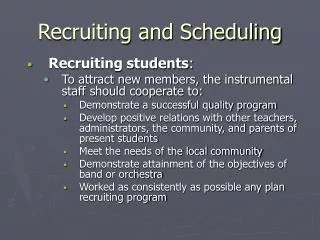
Recruiting • Can be brutal/illegal/unethical • Use connections from coaches, etc • Not solely on athletics/academics- Personality • Use e-mail, calling, texting, letters, video, etc. • DIII has different rules • Athletes can call students, might “feel” more recruited • No Scholarships • Offer “under the table” deals- unethical (13.2)
Being Recruited • Use Berecruited.com and NCSA.com • If a coach contacts the athlete they are being recruited. • All coaches can watch competition and speak to athletes/parents AFTER the competition. • June before Junior year is when athletes will start being CALLED and OBSERVED. • The above are for ALL divisions. • Good athletes should be picky, otherwise they will be overwhelmed. • Honesty with coaches
Unofficial Visit • Can be taken any time. • Coaches can pay for on-campus meal in DI and DII • Should start these junior year • The earlier the more chance of being offered a scholarship sooner. • No division is allowed to provide extra benefits to a potential student athlete. (money, team shirt, etc.)
Official Visit • Encourage students to take these!!! Offer incentives. • Start them EARLY in senior year. • Need an ACT or SAT score to go on Official Visit • Update physical at start of Senior year for potential “Try-out” • All-expenses paid or partial. (i.e. food/housing, no airfare) • 48 hour on-campus limit (currently)
Official visit (cont) • Student host is given money per day to entertain prospective student athlete: DI- $40, DII- $30, DIII- $20 • All Divisions can pay airfare – coach class only • No parties are allowed. Athletes can report that school. • Spend time with the head coach • Bring a list of questions • One per college
Letter of Intent • Verbal Commitment usually comes first. • Athlete must sign without a University Coach present. • Letter of Intent is from the NCAA in accordance with the institution. • ONLY for athletes offered a scholarship.
NAIA and NCCAA • Other Athletic Options • NAIA- less structure, scholarships offered • National Association of Intercollegiate Athletics • NCCAA- not much info. Not many sports offered. • National Christian College Athletic Association
Exceptions • In all divisions there are always ways to get around the rules. • Exceptions are huge in the handbook.
Am I Good enough? • Always Assume YES! • Freshman Year set athletic/academic goals • School Records don’t mean much- look at top ten and the years they were achieved. • Ask the coach • DI Material? They might be… but DII might be a better place for them.
COnclusion • Rules exist to PROTECT the athletes. • Start informing athletes early!! Freshman year, even 8th grade! • There are places for the “non-elite” in college athletics. • Be confident in being recruited by knowing the rules.