The Texas Oil Boom: Spindletop and Its Impact on the Modern Era
60 likes | 202 Vues
In the 1840s, a Canadian scientist discovered how to produce kerosene from oil, sparking demand that led to the drilling of the first oil well in Texas by Lyne T. Barret in 1866. The true turning point came with the Spindletop gusher on January 10, 1901, when oil erupted from a well, flowing 100,000 barrels daily for nine days. This event not only ignited an oil boom in Texas but also stimulated overall economic development, particularly through the demand for lumber used in oil derricks and boosting regional rail lines.


The Texas Oil Boom: Spindletop and Its Impact on the Modern Era
E N D
Presentation Transcript
A New Century The Modern Era Begins p. 458 - 463
Oil – Texas Gold • In the 1840s a Canadian scientist discovered how to make kerosene fuel from oil. • As the demand for kerosene grew, operators bean drilling for oil. • In 1866 Lyne T. Barret drilled the first oil well in Texas, a few miles east of Nacogdoches. • Soon other wells were drilled, starting an oil boom in the area.
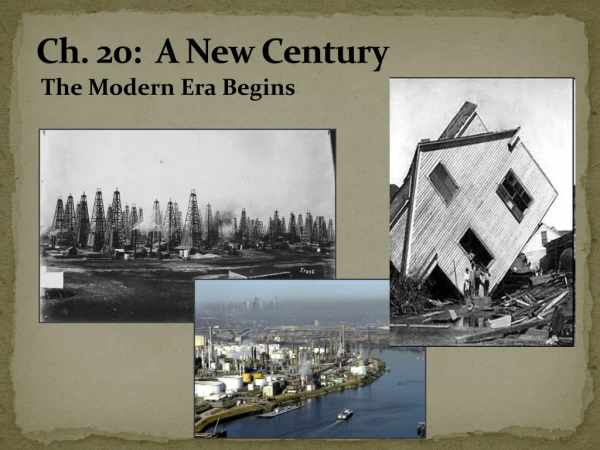
Spindletop-the first Gusher • South of Beaumont on the coastal prairie was a small hill named Spindletop. • On January 10, 1901 while drilling at Spindletop, the rotary drilling bit dug 1,139 ft into the ground, and mud started coming up the hole. • Mud, gas, and oil started shooting into the air, as high as 100 feet. • The well flowed nonstop for the next 9 days.
Spindletop-the first Gusher • It is estimated that 100,000 barrels of oil flowed per day until the well could be capped. • Spindletop boosted overall economic development, both within Texas and beyond the state. • The success of Spindletop encouraged oil drilling on other locations.
Lumber Booms in East Texas • The oil boom in southeast Texas created a demand for products needed by the oil industry. • One such product was lumber because the derricks – high towers that held the drilling equipment – were made of wood. • Rail lines crisscrossed East Texas, making it easy to get the lumber to market.