Overview of Syria, Lebanon, and Iraq: Agriculture, Politics, and Economic Challenges
This chapter explores the historical and contemporary issues facing Syria, Lebanon, and Iraq, focusing on their agricultural sectors and political landscapes. Syria, a land once prosperous with extensive farmlands, now faces outdated farming methods and urban migration. The chapter discusses the government's efforts to build dams amid regional tensions. In Iraq, the discovery of oil transformed the economy, despite the impact of conflicts including the Iran-Iraq War and the Gulf Wars. Political changes following the removal of Saddam Hussein set the stage for the quest for democracy.

Overview of Syria, Lebanon, and Iraq: Agriculture, Politics, and Economic Challenges
E N D
Presentation Transcript
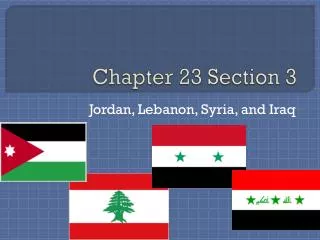
Chapter 23 Section 3 Jordan, Lebanon, Syria, and Iraq
Syria • Always been a prosperous land • Damascus (Capital) • Farmlands • Cotton, wheat, fruit, and vegetables • Methods are OUTDATED • 1/3 of country is irrigated • Rainfall is unreliable • People are moving to the cities and giving up farming • Government Response • Building Dams • Problems with Turkey and dams up river
Syria cont… • 1970 General Hafez al-Assad takes power • Makes ALL political and economic decisions • 2000 his son Bashar Assad takes over • Begins to reform • Market-based economy system • Pressure from the U.S. gets him to pull out from Lebanon in 2005
Iraq • Fertile Crescent and Civilization • Tigris and Euphrates Rivers • Grow grains, fruits, and vegetables • Oil discovery in 1920’s • Spent billions of dollars to develop the country • Airports, roads, schools, universities, hospitals, dams, industry, and rebuilt ancient city of Baghdad
Iraq cont… • Series of Conflicts • Saddam Hussein • Iran-Iraq War, 1980 • Both sides severely damaged – huge debt • Persian Gulf War, 1991 • Invasion of Kuwait for oil reserves • Iraqi Freedom, 2003 • Threat to “National Security” • Removal of Saddam and start of Democracy