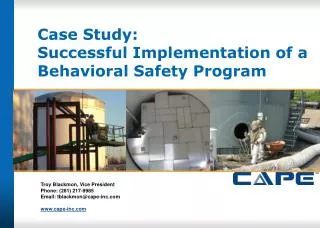
Case Study: Successful Implementation of a Behavioral Safety Program
This case study explores the successful implementation of a Behavioral Safety Program at CAPE Industrial Services, addressing the challenge of high OSHA recordable incidents. Faced with 7 recordable accidents in 2008 and a TRIR of 2.54, the company sought solutions through targeted training and a cultural shift. By emphasizing responsibility, leadership, and positive reinforcement, CAPE significantly improved safety outcomes, reducing TRIR to 0.30 by 2010. This study outlines their journey, results, and future steps for ongoing safety enhancement.

Case Study: Successful Implementation of a Behavioral Safety Program
E N D
Presentation Transcript
Case Study:Successful Implementation of a Behavioral Safety Program
Successful Implementation of a Behavioral Safety Program • The Challenge • The Solution • Training • The Culture Shift • The Results • The Next Steps
The Challenge • 7 OSHA Recordable Accidents during 2008 • 2.54 TRIR Company-Wide • Contributing Factors: • Business volume doubled 2006 to 2007 then doubled again 2007 to 2008 • Lack of effective infrastructure to support business growth • No true culture of safety
The Solution • The solution is simple…right? • Bring in the right help • Identify/provide proper training • Motivate personnel to actively participate • Create a true culture of safety • Live Happily Ever After…
The Training • Identify appropriate training and personnel to receive that training • REQUIRED TRAINING • Behavioral Safety Training (6 hours) [discuss war stories, effective incident response/reporting/investigation, effective reporting of near miss/first-aid incidents] • Effective Safety Audit Training (2 hours + 1 hour practical) • Safety Leadership Program Training (12 hours) • Effective Case Management Training (2 Hours) • PERSONNEL • VP/Business Unit Leader • General Manager of Operations • Project Manager • General Superintendent • Site Superintendent • Site Foreman
The Culture Shift • This is the single most important element of an effective safety program! • How do you get there? • Shift mindset of personnel to accept responsibility for safe work practices • Lead by example from the top of the organization • Implement/Enforce the Safety Audit Program • Effectively manage the data collected • Provide positive reinforcement to incentivize safe work (reward for proper behavior)
The Results • The results will be evident in many ways! • Improvements in TRIR • Morale/Recruiting • Higher level of near miss/first-aid incidences reported • True Culture of Safety • CAPE Industrial Services TRIR History • 2008: 7 OSHA Recordables; TRIR = 2.54 • 2009: 2 OSHA Recordables; TRIR = 0.63 (Increased total Manhours by 2% over previous year) • 2010: 1 OSHA Recordable; TRIR = 0.30 (Increased total Manhours by 5% over previous year) • 2011: 2 OSHA Recordables; TRIR = 1.30 (Increased total Manhours by 12% over previous year) • 2012: 0 OSHA Recordables YTD (Expecting to increase manhours by 15%+ over 2011)
The Next Steps • What’s next for CAPE’s Safety Program? • Improve positive reinforcement program • Recurring/refresher training program • Improve reporting of near miss/first aid incidences • More effective integration of new craft employees • Proper response to Accidents/Incidents
Case Study:Successful Implementation of a Behavioral Safety Program