Jerky
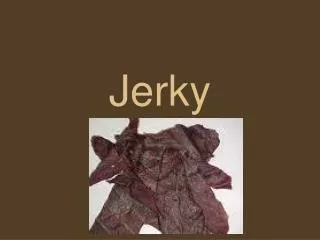
Jerky. What Is It?. Jerky is raw meat or fish which has been salted, sometimes smoked, and the dried. Equipment for Curing and Drying. Sharp Knife or Electric Slicer- cuts meat into thin strips Containers- use appropriate size for curing or marinating.

Jerky
E N D
Presentation Transcript
What Is It? • Jerky is raw meat or fish which has been salted, sometimes smoked, and the dried.
Equipment for Curing and Drying • Sharp Knife or Electric Slicer- cuts meat into thin strips • Containers- use appropriate size for curing or marinating. • Should be made of: glass, stoneware, stainless steel, or plastic. • DO NOT use containers made of wood or metals (other than stainless steel)
Equipment for Curing and Drying Cont. • Vegetable Oil, Mineral Oil, Non- Stick Vegetable Spray- will prevent food from sticking to drying trays or racks • Temperature Controlled Dryer or Oven- used to dry the meat • Storage Containers- to refrigerate or freeze the finished product
What Meats To Use • Use fresh or frozen lean meat • The leaner the meat the better the quality of the finished product. • Beef- Flank, round and sirloin tip cuts are more economical that cheaper cuts which contain more bone and fat. • Lamb- use leg or shoulder cuts. • Less desirable for jerky because it has a higher fat content.
What Meats To Use Cont. • Pork- Fresh pork should not be used for jerky. • Temperatures are not high enough to kill harmful bacteria or the trichinella parasite which causes trichinosis( a disease that can be fatal) • Ham jerky may be made from fully cooked ham and should be used within one to two weeks
What Meats To Use Cont. • Game Meats- Deer, elk, antelope, and other game meats all make good jerky • Any cut can be used, the loin, round , and flank cuts are best. • As a precaution against disease, freeze game meats for at least 60 days before drying • Poultry- Raw poultry usually isn't made into jerky because the flavor and texture is much better cooked. • The small size of most poultry makes it impractical for jerky. Smoked turkey breasts can be sliced and dried into an acceptable jerky
How to Begin • About 4 pounds of lean, boneless meat will make 1 pound of jerky. • Preparation: • Slice meat into long strips 3/16 to ¼ inch thick. • Uniform slices will shorten the drying time • Cut across the grain for increased tenderness • Remove excess fat
Salting and Seasoning • Two ways to cure meat: • Brine Curing- uses a salt and water mixture to soak meat until the salt has been absorbed. • May also contain seasonings and other curing ingredients • Dry Curing- uses a mixture of salt and seasonings which are applied directly to the meat without adding water • Amount of salt used varies with the type of meat, taste preference, and how meat will be stored.
Salting and Seasoning Cont. • Any type of fine quality sodium chloride salt intended for food use may be used. • Pure pickling salt is a good choice • Lay strips of meat in single layers on a clean flat surface, Sprinkle both sides with a salt and seasoning mixture. • Put meat strips in a tightly covered glass, stoneware, plastic or stainless steel container and marinate in the refrigerator for 6-12 hours (stir occasionally)
Salting and Seasoning Cont. • If you want meat with a smoked flavor without going through the smoking process. • Two types of Smoke Flavored Seasonings available: • Liquid Smoke- made by a wood distilling process and gives a very strong smoke flavor. • Use sparingly • Mixed with water and other seasonings • Hickory Flavored Smoked Salt *** Neither have preservative qualities, use only as flavor enhancers.
How To Dry Meat For Jerky • Place meat strips on drying racks • Do not overlap the strips • Two methods of Drying: • Electric Dehydrator • Oven
Dryness Test • To test: first cool a piece, when cool it should crack when bent, but not break. • There should be NO moist spots
Storing • Cool and cut jerky into 2 to 4 inch pieces with kitchen scissors before storing. • Jerky may be refrigerated or frozen in an airtight container to increase shelf life and maintain flavor.