

SlideServe
Menu
Préférences
© SlideServe · v2026

Medieval Romance

manchu avatar
12 diapositives · 404 Views · Oct 03, 2014

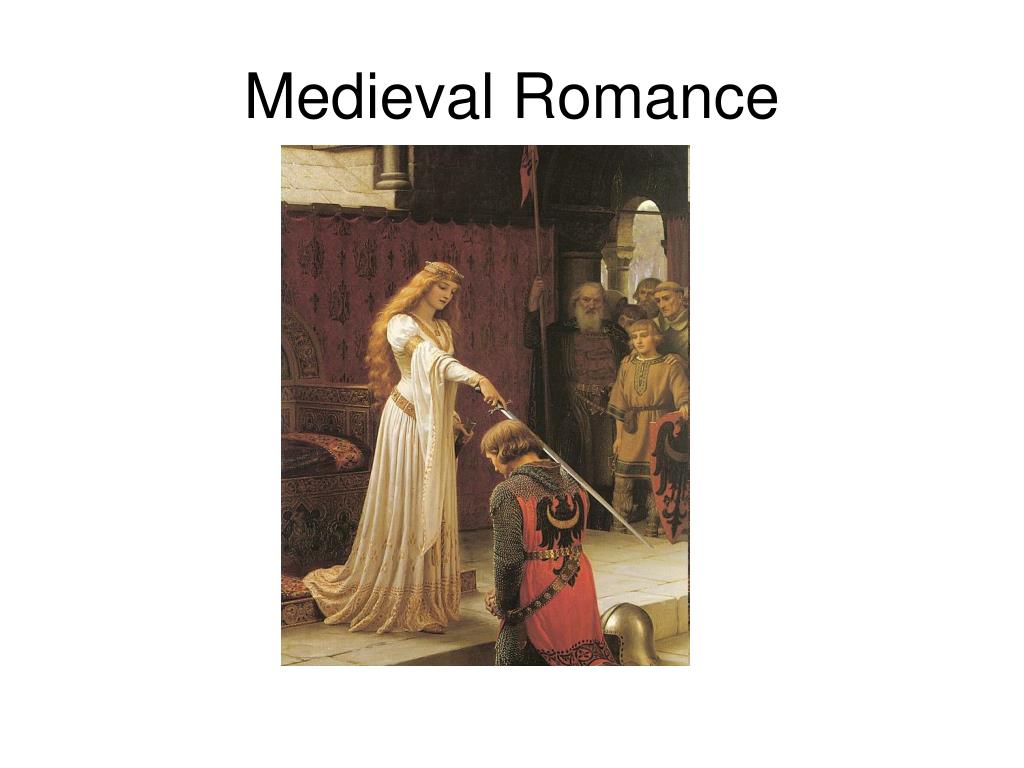
Medieval Romance. The term “romance” comes from “Romance languages,” meaning those languages derived from Latin (French, Italian, Spanish) Many of the first romances were written in those languages Examples: Le Morte d’Arthur (The Death of King Arthur)
Medieval Romance - slide 1
01 / 12Medieval Romance
1 / 17

Télécharger la présentation

Medieval Romance
Une image / un lien ci-dessous est fourni (tel quel) pour télécharger la présentation

Politique de téléchargement : le contenu du site vous est fourni TEL QUEL pour votre information et votre usage personnel ; il ne peut être vendu, concédé sous licence ni partagé sur d’autres sites sans l’accord de son auteur.Le contenu vous est fourni TEL QUEL, pour votre information et votre usage personnel uniquement. Téléchargez la présentation en cliquant sur ce lien. Lors du téléchargement, si vous ne parvenez pas à télécharger une présentation, l’éditeur a peut-être supprimé le fichier de son serveur.Pendant le téléchargement, si vous ne parvenez pas à obtenir une présentation, le fichier a peut-être été supprimé par l’éditeur.

F I N

Plus de contenu associé

Transcription de la présentation
  1. Medieval Romance

  2. The term “romance” comes from “Romance languages,” meaning those languages derived from Latin (French, Italian, Spanish) • Many of the first romances were written in those languages • Examples: • Le Morte d’Arthur (The Death of King Arthur) • Le Roman du Rose (The Romance of the Rose) • Tristan and Isolde • Sir Gawain and the Green Knight

  3. CHARACTERISTICS • A highly artificial and stylized genre • Characters are lords and ladies • Love and chivalry– somewhat contradictory themes • Magic and enchantment, religious mysticism • Lots of fighting, gore, pageantry • Quests • The Knight as a central character

  4. The Knight • A WARRIOR, CHRISTIAN and LOVER • Possesses good manners, delicacy, protocol • Has deference and passion (both!) for ladies • Has skills as a poet, musician, writer, speaker and dancer

  5. The beginning of "The Knight's Tale" illuminated manuscript, Huntington Library, California

  6. 13th century illuminated manuscript: Lancelot du lac fait porter un échiquier magique à la Reine Guenièvre

  7. "The Rescue of Guinevere" by William Hatherell (1855-1920)

  8. The Romance and Love • The Romance tells of ideal, not realistic love • Love is so passionate as to cause fever and illness • Love is usually outside of marriage • Adultery is almost always inevitable, but has tragic consequences

  9. The Knight and Lady • The Knight dedicates himself to the glorification of his Lady, either in secret or openly • He wears her colors to tournaments, devotes his trophies to her • All of his acts of heroism and valor are in her honor • The Lady is generally demanding, sometimes cruel, but always beautiful, intelligent and spirited.

  10. “Lancelot and Guinevere‘s First Kiss,” Manuscript illustration, c 1400. Bibliotheque Nationale, Paris

  11. Works Cited and Consulted • Hatherell, William. “The Rescue of Guinevere.” Oil on canvas, 1910. Rpt. “Arthurian Legends Illustrated.” Kathleen Nichols. Pittsburg State U., 2003. 21 Sept. 2008. <http://www2.pittstate.edu/engl/nichols/arthur2.html>. • “The Knight’s Tale.” Ellesmere Manuscript, ca. 1400. Illuminated manuscript. San Marino, CA.: The Huntington Library. Rpt. “The Knight’s Tale in Images.” Luminarium.1997-2006. 21 Sept. 2008. <http://www.luminarium.org/medlit/knightimg.htm>. • “Lancelot and Guinevere’s First Kiss.” Unknown artist. Manuscript illustration, c. 1400. Paris: Bibliotheque Nationale. Rpt. “Lancelot du Lac.” Timeless Myths. 1999. 21 Sept. 2008. <http://www.timelessmyths.com/arthurian/lancelot.html#Kiss>. • “Lancelot du lac fait porter un échiquier magique à la Reine Guenièvre.” Unknown artist. Late 13th C. Rpt. “Tableaux ayant pour sujet les échecs.” 21 Sept. 2008. <http://www.jmrw.com/Chess/Tableau_echecs/pages/112.htm>. • Leighton, Edmund Blair. “The Accolade.” 1901. Rpt. CGFA. 21 Sept. 2008. <http://cgfa.sunsite.dk/l/l-5.htm#eleighton>. • Love, D. “‘Al this Peynted Process': Chaucer and the Psychology of Courtly Love.” English Studies. 83.5 (Nov. 2002), 391-398.