Great Depression
This overview examines the economic challenges faced by America during the late 1920s and the 1930s, including the implications of the Fordney-McCumber Tariff (1922), which increased tariffs to protect domestic industries amid fears of cheap European imports. The impact of scandals during the Harding administration, the onset of the Great Depression following the stock market crash of 1929, and President Hoover's responses are discussed. The overview also highlights Franklin D. Roosevelt's New Deal initiatives, focusing on job creation, banking reforms, and assistance for struggling farmers and workers.


Great Depression
E N D
Presentation Transcript
Great Depression Ch. 33-34
Fordney-McCumber Tariff Law (1922) • Americans feared the flood of cheap European goods after WWI • Hiked tariff from 27% to 38.5% • Europe needed to sell its goods in America to achieve economic recovery and repay war debts to the US • Spurred European nations to pass high tariffs of their own
Harding Scandals • 1921 – Teapot Dome Scandal • Sec. of Interior transferred naval oil reserves to wealthy oilmen after receiving bribe • 1923 – head of Veterans Bureau embezzles $200 mil. in connection with construction of veterans’ hospitals • 1924 – Attorney General gets caught selling pardons and liquor permits
Calvin Coolidge • Becomes president when Harding dies of pneumonia • Conservative businessman • Wanted to reduce taxes and debt • Laissez-faire
Farmers Suffer • Hurt by their own efficiency • Went into debt purchasing machinery • Crop prices fall because of bigger harvests
International Affairs • Allied war debts $10 bil. • Allies protest repayment • claimed tariffs made it impossible to pay debts • Germany must pay reparations to Brit. and France so they can repay the US • Germany starts printing money, causing hyperinflation
Dawes Plan 1924 • Rescheduled German payments • Private American loans would be made to fix German hyperinflation
Herbert Hoover • Elected in 1928 • Self-made business man • Believed in isolationism, industrialism, free enterprise and small government
Hoover Administration • Setup Federal Farm Board to lend money to farmers • Hawley-Smoot Tariff (1930) – average tariff rate raised from 38.5% to almost 60%
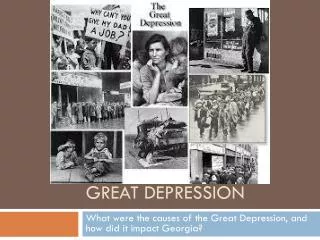
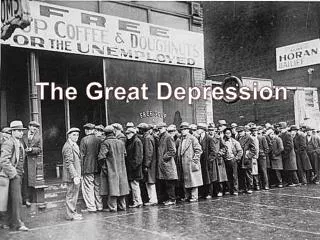
Great Depression • Oct. 1929 – some investors begin selling stock after Brit. Raises interest rates • Oct. 29, 1929 “Black Tuesday”
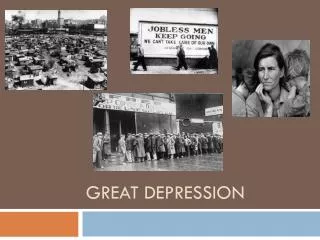
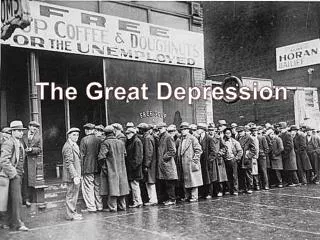
Great Depression • 1930 – 4 mil. workers lost their jobs • 1932 – 6 mil. workers lost their jobs • 5,000 banks collapse (1929-1932) • People lose life savings
Causes of Great Depression • US ability to produce goods greater than its ability to consume goods • Over expansion of credit created massive individual debt • European debts to US • Decreased international trade • Drought in Midwest
Hoover’s Response • No gov’t handouts • Reconstruction Finance Corporation (1932) – assisted companies hoping to increase employment • Norris-La Guardia Anti-Injunction Act (1932) – outlawed “yellow-dog” contracts • Public Works Projects • Hoover Dam
Bonus Army • 1932 – Veterans march on Washington demanding payment of a bonus that was due in 1945 • Evicted by Gen. Douglas MacArthur • Huge blow to Hoover PR
FDR Campaign • “Brain Trust” – informal team of advisors • Campaign slogans • “Happy days are here again” • “The worst is past” • “Prosperity is just around the corner”
Election of 1932 • First time blacks shift allegiance to Dem. Party • Voters voted as much against Hoover as they voted for FDR
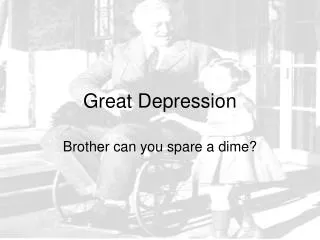
FDR • Emergency Banking Relief Act 1933 • President could regulate banking transactions • Glass-Steagall Act • Set up Federal Deposit Insurance Corp. (FDIC) • Guaranteed banking deposits up to $5,000
Creating jobs • Civilian Conservation Corps (CCC) • Gov’t camps for young men for reforestation, firefighting, etc. • Federal Emergency Relief Act (FERA) • $3 bil. to states for work projects • Agricultural Adjustment Act (AAA) • Paid farmers not to grow crops • Inadvertently created unemployment • Struck down by Supreme Court in 1936 • Civil Works Administration (CWA) • Provided temporary jobs during harsh winter
Helping Industry and Labor • National Recovery Act (NRA) • Designed to assist industry, labor and the unemployed • Encouraged employers to hire more workers • Ex. Hire two men to work 30 hrs/week rather than one man to work 60 hrs/week • Established minimum wage
Helping Industry and Labor (cont.) • Public Works Administration (PWA) • Provided industrial recovery and unemployment relief • Built Coulee Dam • 21st Amendment – repeals prohibition to tax alcohol
The Dust Bowl • Caused by: • Drought • Wind • Poor crop rotation • No trees • Grapes of Wrath– John Steinbeck • Resettlement Administration • Moved poor farmers to new land • Planted trees
Banks and Big Business • “Truth in Securities” Act • Can’t lie about how well a stock is doing • Securities and Exchange Commission (SEC) • Regulates stock market
Housing and Social Security • Federal Housing Administration (FHA) • Provided loans and mortgages to individuals for improving homes and buying new ones • Social Security Act of 1935 • Provided money for unemployment insurance • Provided money for senior citizens, disabled, etc. • Funded by payroll tax
A New Deal for Labor • National Labor Relations (WAGNER Act) • Boost to labor movement • Reassured rights to collective bargaining • Fair Labor Standards Act • Established 40 hour work week
FDR v. Supreme Court • Supreme Court strikes down 7 of 9 New Deal cases • FDR wants new court in favor of his programs • Wants to add one new judge for every judge over the age of 70 • Congress and the American public disagree
Roosevelt Recession • 1937 – people blame tax hike for Social Security • FDR’s solution: spend more money
Impact of New Deal • Federal gov’t becomes largest employer • Republicans claimed the way out of Depression was less gov’t restrictions • Some argued it did not fix depression since farm surpluses still existed