State Courts: Functions, Structure, and Comparison with Federal Courts
80 likes | 177 Vues
Explore the functions and structure of state courts, including their role in addressing violations of state laws and constitutions, hearing civil and criminal cases, and process of electing or appointing judges. Compare state court systems with federal courts, highlighting similarities and differences.


State Courts: Functions, Structure, and Comparison with Federal Courts
E N D
Presentation Transcript
State Courts Chapter 8 section 4
State Court Cases • All states have the right to create their own court system • State courts address violations of state constitutions and state laws • Hear civil and criminal cases
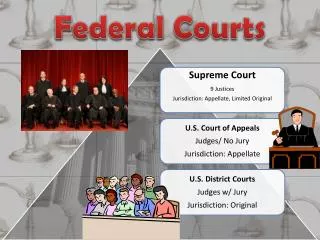
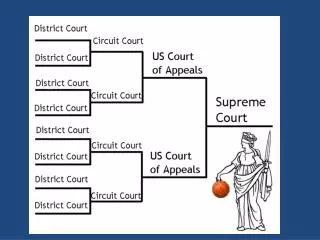
Review: Federal Courts • How many levels are their in the federal court system? • List each court in the federal court system and 1 fact about each
State Court System • Trail Courts • Hear all criminal and civil cases • Ex. Traffic case or major robbery case • Judges usually elected • Appeals Courts • A person has the right to appeal a decision made in trial court • State Supreme Court • Highest court in most states • Rulings are final
Selection of State Judges • Supreme court judges can be elected or appointed by the governor ( Depends on state constitution) • Would it be best to elect judges or have them appointed by the governor?
The Missouri Plan • Judges, lawyers, and citizen prepare a list of qualified judges • The governor then appoints one from the list
State Judges • Are elected by voters at the end of their term • Can be removed from office by impeachment or recall • Franklin County Courthouse • North Carolina’s Supreme Court justices
State V. Federal Courts • Compare state and federal court systems • Explain 2 ways the court systems are similar and 2 ways they differ