Comparative Analysis of Observable Structures in Plant and Animal Cells Using Microscopy
This experiment investigates the differences between plant and animal cells by observing them under a compound microscope. By examining onion epidermis, cheek cells, and Elodea leaf structures, students will document variations in shape, arrangement, and size. Key variables include the type of cell as the independent variable, with shape, arrangement, and size as dependent variables. The activity encourages the creation of a data table to record findings and culminates in a lab report summarizing observations and insights regarding the evolutionary differences between plant and animal cells.

Comparative Analysis of Observable Structures in Plant and Animal Cells Using Microscopy
E N D
Presentation Transcript
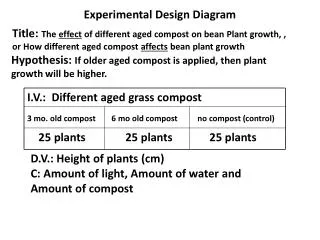
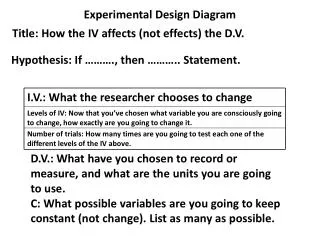
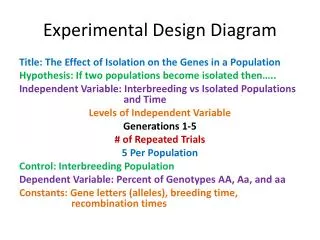
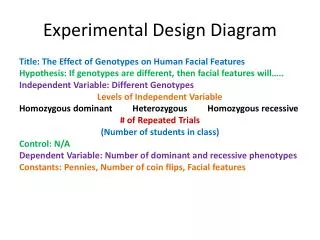
Observational Design Diagram Title: Observable Structures in Plant and Animal Cells Hypothesis: If plant and animal cells are viewed under a compound microscope, the observable differences will be….. Independent Variable: Type of Cell Dependent Variables: Shape, Arrangement, Size, Structures
Materials Needed: 1. Microscope 5. Elodea leaf 9. Salt Water 2. Microscope Slides 6. Toothpick 10. Dropper 3. Cover Slips 7. Iodine 4. Onion 8. Water Procedure Outline: 1. Break a piece of onion and spread the epidermis on the slide. 2. Add a drop of water to the onion. 3. Add a drop of iodine to the water. 4. Place a cover slip over the onion cells. 5. Place a drop of salt water on a new slide. 6. Gently scrape the inside of your cheek with a toothpick. 7.Gently stir the cheek cells off of the toothpick into the drop of water on the slide. 8. Place a drop of iodine on the cheek cells. 9. Place a cover slip over the cheek cells. 10. Place an elodea leaf on a new slide. 11. Add a drop of water to the slide. 12. Place a cover slip over the elodea cells. 13. Observe all three types of cells and create a data table displaying your findings. 14. Add a drop of salt water to the edge of the cover slip on the elodea slide and pull it across the specimen using a bit of paper towel on the opposite edge. Observe the cell membrane. 15. Type a lab report.
Conclusion: • Summarize the data from your table. • Explain why you think plant and animal cells have evolved different structures. • Explain some way that this data could be useful to someone? • What could we have done to improve on this activity?