Download
1 / 21
210 likes | 327 Vues
This document outlines the operational principles of an advanced lander designed to monitor bioluminescence in ocean environments. With a mission duration ranging from 8 hours to 12 months, the lander can collect data during free fall, utilizing acoustic commands for activation and ballast release for ascent. Key features include CTD profiling, camera capabilities, and interactions with luminescent organisms at various depths. The research highlights factors affecting bioluminescence, such as water flow velocity, inter-specific interactions, and challenges related to organism adhesion and entrapment.

E N D
KM3Net WP5Vertical profiles of bioluminescence Monty Priede & Alan Jamieson Oceanlab i.g.priede@abdn.ac.uk
The Lander Operating Principle Descent at <1m.s-1 Data collection possible during free fall
The Lander Operating Principle Mission Duration 8h to 12 months
The Lander Operating Principle Ship Returns Acoustic Commands Activated
The Lander Operating Principle Ballast Release Ascent Commences
The Lander Operating Principle Surface, Spotting flag VHF DF + ARGOS Data retrieved on board ship
ISIT Lander MORS acoustic releases Current meter ISIT camera controller ballast
CTD ISIT profiler Camera Controller Recorder Splat Screen
ISIT Camera profile mode with ‘Splat Screen’ in field of view
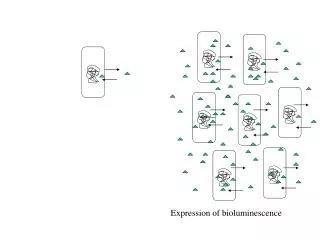
Shear Impact Adhesion Spontaneous Trapped Water flow Interaction of Luminescent Organisms with an Array
Abundance of organisms Species Size Status – (reproductive, juvenile, larvae) Locomotor Ability Spontaneous emissions Inter-specific interactions Intra-specific interactions Stimulated emissions Water flow velocity Impacts Shear stress Adhesion Entrapment Biological Factors Detected by an Array
Bioluminescence Detected by an Array • Decrease with depth • Seasonal change • Spontaneous luminescence likely to be unimportant • Luminescence stimulated by the array may be dominant • Adhesion and entrapment of organisms on the array will be be problematic at certain times and depths