Geosciences Technology Applications in Robotics and Data Analysis
50 likes | 75 Vues
Explore the intersection of technology and geosciences through embedded systems, robotics, and sensing systems. Learn how to use measurement tools, sensors, and data analysis for geological applications.


Geosciences Technology Applications in Robotics and Data Analysis
E N D
Presentation Transcript
Technology in Geosciences James Conrad, jmconrad@uncc.edu Assoc. Professor, Electrical and Computer Engineering UNC Charlotte Image from the iRobot Website
James Conrad - Quick Background • Worked in industry and academia in embedded systems and robotics. • Consultant for iRobot Maritime Division • Worked with students building underwater robotic vehicles • Worked with students building geological sensing systems
One Way to Get Involved … • Marine Technology Society, holds a annual underwater Remotely Operated Vehicle (ROV) competition. Image from the Marine Technology Society Website
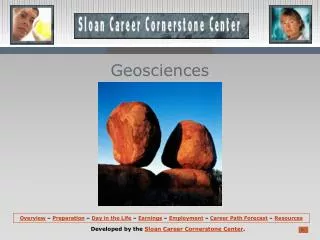
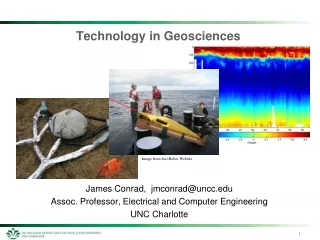
Example of Technology in Geosciences • “Instrumented” bolder, measured temperature, moisture, strain, sound. • Recorded data, looking for “cracking” or other events.
Prepare Well for What You Want • User of technology (i.e. Geologist, Marine Scientist): • Understand measurement systems (i.e. National Instruments data collection systems) • Understand sensor technology (pressure, moisture, strain, temperature, humidity, sound, light) • Understand data collection and statistics • Able to use problem solving skills to draw conclusions • Creator/Designer of technology (i.e. Engineer) • 4-year degree, Calculus, physics, disciplinary topics • Builder of systems using technology (i.e. Technician) • 2 or 4-year degree, science, disciplinary topics