
Brake Rotor Temperature
E N D
Presentation Transcript
Brake Rotor Temperature Nathan Bloomfield Josh Carroll Brian Winder
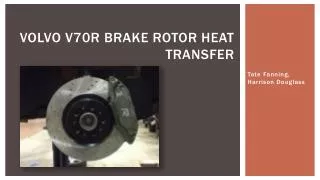
Objective • Analyze brake rotor temperature for a Formula SAE car. http://www.comsol.com/showroom/gallery/102.php# http://www.ntrc.gov/pdfs/showcase020506/DaleHartsock.pdf
Assumptions • Even heat transfer side to side • Kinetic energy of the wheels is not significant • All of the kinetic energy goes into the brake rotors as heat • There is nothing else slowing the car down
Method • Assume 1.5 g constant acceleration and deceleration to simulate race conditions. • Five cycles from 0 to 37 m/s (83 mph) • In Excel, we found: • Kinetic energy • Initial temperature guess • q"rad, q"conv and total q” • Final temperature All of these change throughout the cycle
Conclusions and Recommendations • Use different size rotors • Rotor width can be changed to increase or decrease the overall temperature