Download
1 / 26
260 likes | 384 Vues
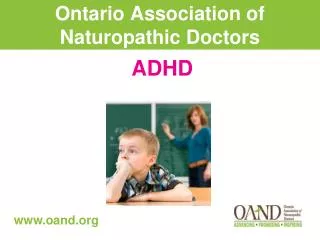
Attention-Deficit/Hyperactivity Disorder (ADHD) is a prevalent behavioral condition affecting 3-5% of children, with symptoms categorized into inattention, hyperactivity, and impulsivity. Diagnosis is based on severity and frequency, impacting daily life. Current treatments include stimulant medications, but they may lead to side effects. Naturopathic approaches focus on nutrition, lifestyle changes, and botanical medicine to support dopamine levels and reduce symptoms. Learn more about ADHD trends, long-term complications, and alternative strategies to manage the disorder effectively.

E N D
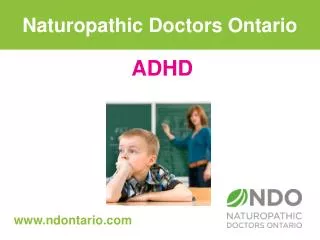
Naturopathic Doctors Ontario ADHD www.ndontario.com
ADHD Attention Deficit Hyperactivity Disorder www.ndontario.com
History History • 1970's - Attention deficit disorder (ADD) • 1980's - Attention deficit disorder with or without hyperactivity (ADD / ADHD) • 1990's - Attention deficit hyperactivity disorder (ADHD) further defined www.ndontario.com
Symptoms Symptoms 3 symptom categories: • Inattention • Hyperactivity • Impulsivity www.ndontario.com
Diagnosis Diagnosis Otherwise Normal Behaviour except frequency and severity of symptoms increases to the point that: • It occurs in most situations • Has a negative impact on the child’s life www.ndontario.com
Inattention Inattention • Inattention to details • Easily distracted • Difficulty organizing tasks and activities www.ndontario.com
Hyperactivity Hyperactivity • Cannot sit still • Difficulty playing quietly • Excessive talking www.ndontario.com
Impulsivity Impulsivity • Blurts out answers before question • Difficulty waiting till turn • Interrupts www.ndontario.com
Incidence: Children Incidence: Children • ADHD is the most commonly diagnosed behavioral disorder of childhood. • It affects about 3 - 5% of school aged children. • ADHD is diagnosed much more often in boys than in girls. www.ndontario.com
Incidence: Adults Incidence: Adults • It is now known that ADHD symptoms continue into adulthood for about 60% of children with ADHD. • That translates into 4% of the US adult population, or 8 million adults. • Few adult cases are identified or treated leads to complications www.ndontario.com
Long Term Complications Long term complications • Addiction: Drug and alcohol abuse • Failure in school: Underachievement • Problems maintaining a job • Trouble with the law • Rejection from peers: rejection, low self-esteem, anxiety, depression www.ndontario.com
Possible Causes: Possible causes: • Inherited? • Genetics? • Stressful early childhood experience • Trauma /PTSD Currently accepted mechanism: Lowered Dopamine levels, under-stimulation of reward center of the brain www.ndontario.com
Current Medical Treatment Current Medical Treatment Stimulant drugs to increase dopamine in the brain: • Methylphenidate ( Ritalin, Concerta) • Amphetamines ( Dexedrine, Adderall) www.ndontario.com
Outcomes Outcomes As long as treatment is on-going and consistent, it: • Is effective - Reduces and controls symptoms • Lessens likelihood of complications However, it is not a cure for ADHD and side effects are many www.ndontario.com
Side Effects Side Effects • Cardiovascular: rapid heart beat, palpitation, stroke, hypertension • Nervous system: depression, seizures, insomnia, headache, Tourette’s syndrome, psychotic episodes • Gastrointestinal: dry mouth, diarrhea, constipation, anorexia • Skin: hives, rash • Endocrine: impotence, decreased libido www.ndontario.com
Nutritional Support Nutritional Support Boost Dopamine levels with nutrition Increase intake of dopamine building blocks: • l-phenylalanine (essential amino acid) • Wheat germ • Eggs, Soy, Cheese, Dairy, Meat www.ndontario.com
Specific Nutrients Specific Nutrients • EFA’s • Magnesium • B Vitamins: Anxiety, Depression, Mood • B6 www.ndontario.com
Antioxidants Antioxidants • Antioxidants (beets, celery, carrots, blue-berries, greens) to protect oxidation of dopamine • Apples contain quercetin: protect dopamine breakdown/oxidation • Bananas contain building blocks for dopamine www.ndontario.com
Botanical Medicine Botanical Medicine Nerve Tonics: • Chamomile • Avena • Hops • Melissa • Are gentle and safe for children and calm hyperactivity by acting on the nervous system www.ndontario.com
Lifestyle Lifestyle • Prenatal and postnatal care • Stress reducing treatments to mother and child which are safe • Underlying food intolerances/ allergies www.ndontario.com
Other Treatments Other Treatments • Elimination Diet • Feingold Diet • Homeopathy • Counseling • Stress reduction www.ndontario.com
Maintenance Maintenance • Strategies: daily, weekly, monthly and annual to remain healthy • How to listen to your symptoms • How to take care of your health www.ndontario.com
References References • Pub Med Online: http://www.ncbi.nlm.nih.gov/pubmedhealth/PMH0002518/ • National Institute for Mental Health: http://www.nimh.nih.gov/health/publications/attention-deficit-hyperactivity-disorder/complete-index.shtml • ADHD Canada: www.adhdcanada.com/ • Canadian ADHD Resource Alliance: http://www.caddra.ca • Ritalin-free Kids: Robert Ullman N.D. and Judyth Reichenberg-Ullman N.D. http://www.ritalinfreekids.com/
For more information call 416-233-2001 or info@ndontario.com
To find out more about naturopathic medicine visit: www.ndontario.com