Understanding the Demographic Transition Model: Stages of Population Growth and Change
10 likes | 453 Vues
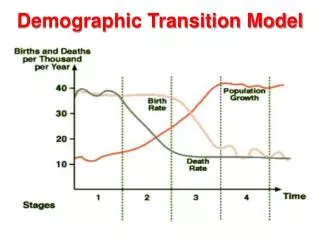
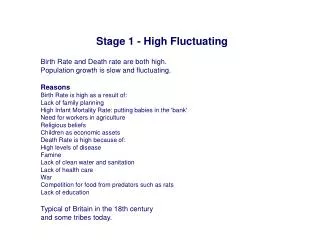
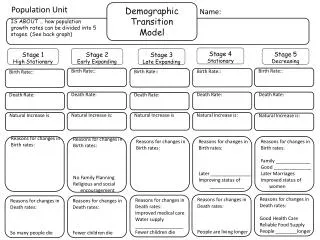
The Demographic Transition Model (DTM) outlines how population growth rates transition through five distinct stages: 1) High Stationary, 2) Early Expanding, 3) Late Expanding, 4) Stationary, and finally 5) Decreasing. Each stage signifies changes in birth and death rates influenced by factors such as improving women's status, later marriages, healthcare advancements, and food reliability. As societies evolve, the dynamics of birth and death rates transform, affecting overall population growth and demographic structures.


Understanding the Demographic Transition Model: Stages of Population Growth and Change
E N D
Presentation Transcript
Demographic Transition Model Birth Rate:: IS ABOUT … how population growth rates can be divided into 5 stages. (See back graph) Death Rate: Natural Increase is Reasons for changes in Birth rates: Stage 1 High Stationary Stage 2 Early Expanding Stage 3 Late Expanding Population Unit Name: Stage 4 Stationary Stage 5 Decreasing Birth Rate:: Birth Rate:: Birth Rate:: Birth Rate:: Death Rate: Death Rate: Death Rate: Death Rate: Natural Increase is: Natural Increase is Natural Increase is: Natural Increase is: Reasons for changes in Birth rates: Reasons for changes in Birth rates: Later _______________ Improving status of _____________ Reasons for changes in Birth rates: Family _____________ Good ______________ Later Marriages Improved status of women Reasons for changes in Birth rates: No Family Planning Religious and social encouragement Reasons for changes in Death rates: Good Health Care Reliable Food Supply People ________longer Reasons for changes in Death rates: People are living longer Reasons for changes in Death rates: Improved medical care Water supply __________________ Fewer children die Reasons for changes in Death rates: So many people die Reasons for changes in Death rates: Fewer children die